A styled bookshelf is one of the hardest things to get right by eye and one of the easiest once you know the formula. The secret is that designers are not being random: they mix books with objects, vary the height, and leave deliberate empty space, in a repeatable pattern you can copy shelf by shelf.
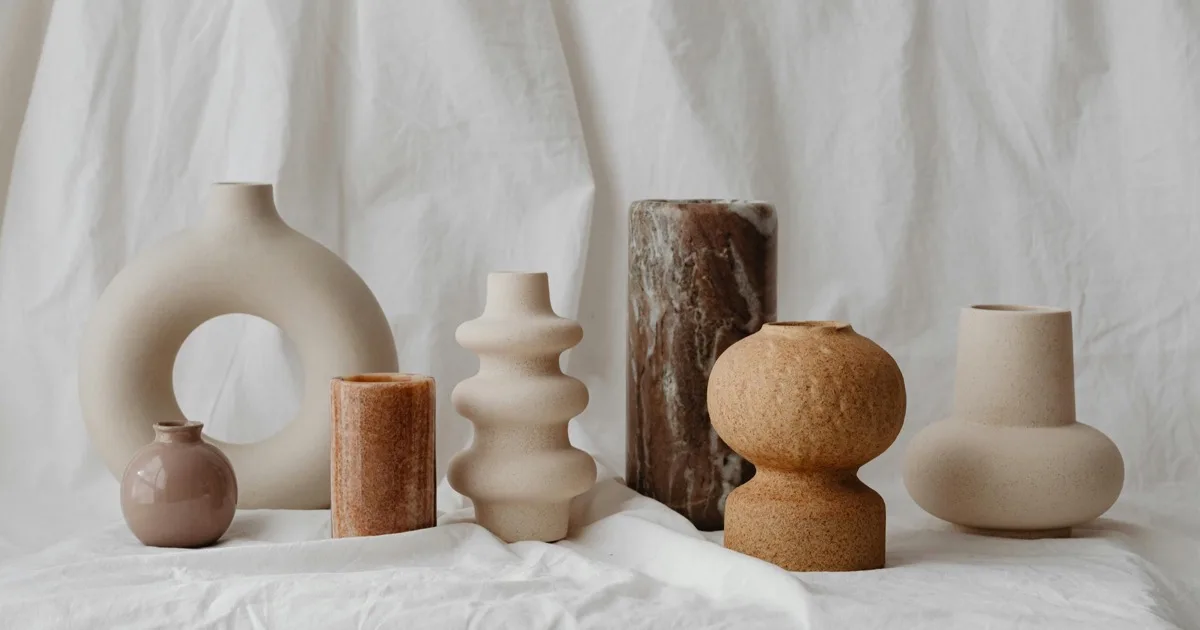
This guide gives you that formula, what to put on a shelf besides books, how to style shelves with no books at all, and the mistakes that make a shelf look cluttered. The vases, stone objects, and pieces here are in stock in our vases and travertine decor collections.
The Bookshelf Styling Formula

Work one shelf at a time, and give each shelf three kinds of thing:
- Books, two ways. Stand some upright, and lay a few in a horizontal stack. The flat stack doubles as a riser for a small object and breaks up rows of spines.
- An object with height. A vase, a tall jar, or a small framed piece leaned at the back draws the eye up.
- An object with weight or texture. A bowl, a stone piece, a bookend, or a small plant grounds the group at the base.
The rules that tie it together:
- Group in odd numbers, usually threes, in loose triangles rather than straight lines.
- Vary the height within each group so nothing sits in a flat row.
- Leave negative space. Empty shelf is part of the design. A packed shelf reads as clutter.
- Repeat a material or color up the shelves so the whole unit feels connected.
A pair of Travertine Bookends (89.95 EUR) does two jobs at once here: they hold a row of books upright and add a natural stone object to the shelf.
What to Put on a Bookshelf Besides Books

Books alone look like storage. Objects turn a bookcase into decor. Pull from these, and keep the palette calm:
- Vases. One or two per shelf, at different heights, hold a few dried stems or stand empty as sculpture. A Nordic Ceramic Vase (59.99 EUR) or Vintage Ceramic Vase (79.99 EUR) works well.
- Bowls and stone pieces. A low Travertine Bowl (74.99 EUR) or a small sculpture like the Marble Arch Ornament (64.95 EUR) adds weight and quiet pattern.
- A candle. A Wooden Candlestick Holder (39.99 EUR) adds height and warmth, lit or not.
- Something living. A small trailing plant or a bunch of dried stems in a vase softens the hard lines of the shelf.
- Personal pieces. A framed photo, a bowl of found objects, a stack of two beautiful books cover-up. These make the shelf feel like yours.
Browse the travertine decor and vases ranges for shelf-sized objects.
How to Style a Bookshelf Without Books
An open shelf or a bookcase you would rather fill with objects follows the same rules, with a bit more discipline because there are no book spines to fill space.
- Lean into negative space. With no books, empty room matters even more. Aim to fill only about half to two-thirds of each shelf so objects can breathe.
- Group in threes at different heights. A tall vase, a medium bowl, and a low stone piece in a loose triangle reads as intentional.
- Use baskets and boxes for bulk. A woven basket or a wooden box fills a lower shelf, hides clutter, and adds a large calm shape among the smaller objects.
- Repeat materials. Carry wood, stone, and ceramic up the shelves so the unit reads as one collection, not a jumble.
Floating shelves work the same way: treat each shelf as one small group and keep plenty of the shelf empty. The same method we use in our coffee table decor guide, tray, height, and one object, scales down to a single floating shelf.
Common Bookshelf Styling Mistakes
Most shelves go wrong in the same few ways. Avoid these and yours will already look better than most.
- Packing every inch. A full shelf reads as clutter. Remove a third of what is on it and the rest looks styled.
- Everything the same height. Rows of same-height spines and objects look flat. Add a horizontal book stack and a tall vase to break the line.
- Lining things up in a row. Straight lines look like a shop display. Group in loose triangles instead.
- No repetition. Random objects with no shared material or color feel chaotic. Repeat one or two materials up the whole unit.
- Forgetting the base. A lower shelf with a basket or a stack of large books grounds the whole bookcase so it does not feel top-heavy.
Styling a bookshelf is a formula, not a talent: mix upright and stacked books, add an object with height and one with weight, group in odd numbers, and leave real empty space. Repeat a material up the shelves and the whole unit reads as one considered collection.
Start with a pair of bookends, add a vase or two and a stone bowl at different heights, and edit until each shelf has room to breathe. Browse the collections for shelf-sized pieces.
Frequently Asked Questions
Enjoyed this guide?
Share it with someone who'd find it useful