The world's top interior designers don't just decorate rooms - they shape how we think about living. Their projects appear in the pages of Architectural Digest and Elle Decor, their philosophies influence millions of home design decisions, and their innovations in materials, spatial thinking, and aesthetic direction ripple through the entire design industry.
But what makes these designers and firms truly interesting isn't their celebrity or their most luxurious projects. It's their ideas - the design principles, material philosophies, and spatial strategies that make their work consistently extraordinary. And the best part? Many of these principles are accessible to anyone willing to think carefully about their own space.
In this guide, we profile some of the most influential top interior designers and top interior design firms working today. For each, we highlight their signature style, their most important contributions to design thinking, and the practical lessons that any homeowner can apply - whether you're furnishing a studio apartment or a sprawling estate. This isn't a ranking; it's an education in what makes great design great.
Kelly Wearstler: Maximalist Materiality

Kelly Wearstler is arguably the most recognizable name in contemporary interior design. Based in Los Angeles, her work is known for bold material combinations, unexpected color pairings, and a maximalist approach that feels curated rather than chaotic. Her projects include residences for A-list clients, landmark hotels (the Proper Hotels and the Viceroy chain), and her own furniture and accessories lines.
Signature style: Wearstler's interiors are characterized by a fearless mixing of periods, materials, and scales. A mid-century Italian console might sit beneath a contemporary abstract painting, on a floor of antique marble, beside a custom-designed sofa in an unexpected textile. She treats each room as a composition - balancing bold, attention-grabbing moments with quieter passages that give the eye rest.
Key contribution: Wearstler popularized the idea that mixing eras, styles, and materials creates more interesting interiors than adhering to a single aesthetic. Her work proved that "eclectic" doesn't mean "messy" - when guided by a sophisticated eye for proportion, color, and material quality, diverse elements can create deeply harmonious spaces.
What you can learn:
- Mix, don't match. A room where everything is from the same collection or era feels like a showroom. Combine a vintage find with a modern lamp, a handcrafted object with a mass-produced essential, and the room comes alive with tension and interest.
- Materials matter more than style. Wearstler's rooms work because the materials are exceptional - rich marble, hand-blown glass, artisan ceramics, natural stone. When the materials are good, mixing them becomes an asset. This is why handcrafted, natural material pieces work in virtually any interior style.
- Have one "wow" moment per room. A single bold piece - an oversized artwork, a statement light fixture, an unusual furniture piece - gives the room a focal point and conversation starter. Everything else can be more restrained.
Axel Vervoordt: The Art of Imperfection
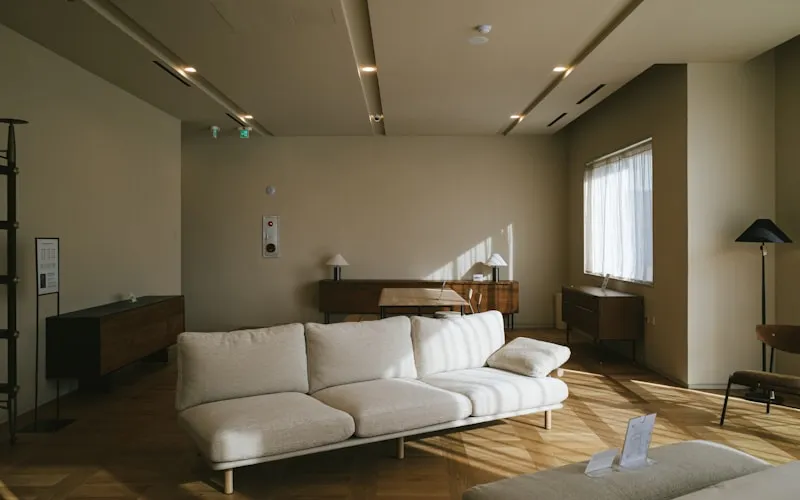
Belgian designer Axel Vervoordt is widely regarded as the master of wabi-sabi in Western interior design. His work celebrates the beauty of age, imperfection, and natural materials. His client list includes some of the world's most discerning collectors, including Kanye West, Robert De Niro, and European aristocracy. His interiors feel ancient, peaceful, and deeply grounded in the natural world.
Signature style: Vervoordt's spaces are characterized by raw plaster walls, ancient stone floors, centuries-old furnishings, and a restrained palette of earth tones. Light is treated as a material - carefully controlled through small, strategically placed windows and candles rather than overhead fixtures. The mood is monastic, contemplative, and timelessly elegant.
Key contribution: Vervoordt brought the Japanese aesthetic philosophy of wabi-sabi into mainstream Western design - the idea that beauty is found in imperfection, impermanence, and incompleteness. He proved that a crumbling plaster wall, an antique wooden stool with worn edges, and a rough ceramic vessel can be more beautiful than any new, polished luxury object.
What you can learn:
- Embrace age and patina. Don't replace everything that shows its age. A worn wooden table, a faded textile, a ceramic piece with a repaired crack - these objects carry history and soul that new items lack. Our handcrafted wooden stools are made with this philosophy: natural variations and imperfections are features, not flaws.
- Reduce to reveal. Vervoordt's spaces are powerful because of what's absent, not what's present. Removing the unnecessary reveals the essential. In your own home, try removing half the objects from a shelf or table - the remaining pieces suddenly become more visible, more valued, and more beautiful.
- Light is a design material. Pay as much attention to how light enters and moves through your space as you do to the furniture within it. A single, well-placed window or candle can define the entire character of a room.
Ilse Crawford: Designing for the Human Experience
London-based designer Ilse Crawford (founder of Studioilse) is perhaps the most intellectually rigorous of the top interior designers. Her design philosophy centers on human experience - how a space makes you feel, how your body interacts with it, and how it supports your daily rituals and wellbeing. She is a founding chair of the Man and Well-Being department at the Design Academy Eindhoven and has designed everything from residential interiors to the IKEA Sinnerlig collection.
Signature style: Crawford's interiors are warm, tactile, and grounded in natural materials. Wood, leather, linen, stone, and ceramic dominate - always in their most honest forms, never lacquered or gilded beyond recognition. Her spaces feel like they belong to real people who cook, read, entertain, and rest - never like glossy magazine sets designed for photography rather than living.
Key contribution: Crawford shifted the conversation from "how does it look?" to "how does it feel?" She argued that design's true purpose is to support human wellbeing - physically, emotionally, and socially. Her work demonstrated that the most beautiful interiors are those where people feel most genuinely comfortable and alive.
What you can learn:
- Design for all the senses. Don't just think about how a room looks. Consider how it feels underfoot (natural wood vs. cold tile), how it sounds (absorbed vs. echo), how it smells (fresh linen vs. stale air), and how objects feel in your hands (smooth ceramic vs. rough stone). A home designed for multi-sensory comfort is a home you'll love living in.
- Support your rituals. Think about the daily rituals that matter to you - morning coffee, evening reading, weekend cooking - and design specific areas to support them beautifully. A dedicated tea corner with a beautiful pot, cups, and a comfortable seat transforms a routine into a ritual.
- Honest materials create honest spaces. Crawford avoids materials pretending to be something they're not - no plastic masquerading as wood, no synthetic fabric imitating linen. Use real materials in their natural state, and the space feels truthful and grounded. Our Raw Aesthetic collection embodies this principle of material honesty.
Top Interior Design Firms Shaping the Industry
While individual designers often capture the spotlight, many of the most impactful projects in the world are executed by design firms - multidisciplinary teams that bring together architects, interior designers, lighting specialists, and material experts. Here are some of the top interior design firms whose work sets the standard for the industry.
Studio KO - Founded by Karl Fournier and Olivier Marty, this Paris and Marrakech-based firm is known for blending modernist architecture with local material traditions. Their Yves Saint Laurent Museum in Marrakech is a masterpiece of contextual design. Lesson: respond to place. The best interiors honor their geographic and cultural context through local materials and regional craft traditions.
Yabu Pushelberg - George Yabu and Glenn Pushelberg lead one of the world's most awarded hospitality design firms, with projects for Four Seasons, Park Hyatt, and Edition Hotels. Their work balances minimalism with warmth, creating spaces that feel both rigorous and inviting. Lesson: restraint is not coldness. You can create minimal spaces that feel deeply warm through material quality, lighting, and scale.
Norm Architects - This Copenhagen-based firm is a leading voice in Scandinavian residential and hospitality design. Their work for Menu, Audo, and numerous residential clients exemplifies the soft minimalism that has become one of the dominant aesthetic movements of the 2020s. Lesson: softness in minimalism. Use warm, tactile materials - rounded forms, natural textiles, rattan and woven elements - to prevent minimalism from feeling sterile.
Gachot Studios - Founded by John and Christine Gachot in New York, this firm creates interiors that combine industrial honesty with artisan warmth. Their projects for The Shinola Hotel and numerous Manhattan residences showcase a material-first approach. Lesson: let materials lead. Rather than applying a style and selecting materials to fit, start with materials you love and let the design emerge from their inherent qualities.
Studio Shamshiri - Pamela and Ramin Shamshiri's Los Angeles-based firm creates interiors that feel collected over time, blending vintage pieces with contemporary art and handcrafted objects. Lesson: tell a story over time. The most interesting interiors look like they evolved, not like they were installed in a single delivery. Buy slowly, choose carefully, and let your space develop.
Emerging Designers to Watch
The next generation of top interior designers is pushing the field in new directions - toward greater sustainability, cultural diversity, digital integration, and emotional depth. Here are voices shaping the future of design.
Retrouvius (Maria Speake & Adam Hills): This London firm specializes in salvage-based design - creating new interiors almost entirely from reclaimed and repurposed materials. Their work demonstrates that sustainability and beauty are not just compatible but synergistic. Old materials carry stories, textures, and qualities that new materials simply cannot replicate. Their approach challenges the industry's default assumption that new is better.
Faye Toogood: British designer and sculptor Faye Toogood blurs the line between art and design. Her furniture, lighting, and interiors have an elemental, almost primitive quality - massive stone forms, raw clay textures, and oversized proportions that feel connected to the earth. Her work suggests that the future of design may look back toward the handmade, the raw, and the geological.
Jessica Helgerson: Portland-based Helgerson creates interiors that feel effortlessly natural - homes where indoor and outdoor blur, natural materials dominate, and the overall feeling is one of intelligent simplicity. Her residential projects are among the most influential on platforms like Instagram and Pinterest, shaping how millions of people think about home design.
The sustainability vanguard. A growing movement of designers - including Oliver Heath, Jason McLennan, and William McDonough (whose Cradle to Cradle philosophy has transformed sustainable design thinking) - are proving that the most responsible design is also the most beautiful. They prioritize natural materials, circular economy principles, and biophilic design strategies that connect interiors to the natural world.
What these emerging voices share: A commitment to materials with integrity. A rejection of disposable, trend-driven design. A deep respect for craft, nature, and human experience. These values are not passing trends - they represent a fundamental shift in what design means and who it serves. They're the same values that guide our curation at Pitta.lv: handcrafted, sustainable, and designed to last.
Universal Principles from the World's Best Designers
Despite their diverse styles, the world's top interior designers share remarkably consistent principles. These are the foundational ideas that recur in the work of the best, regardless of their aesthetic or market.
1. Quality over quantity, always. Every top designer we've profiled would rather have one exceptional handcrafted piece than ten mediocre mass-produced ones. This isn't about price snobbery - it's about value. A well-made wooden stool that lasts 30 years and grows more beautiful with age delivers more value than a cheap stool replaced every 3 years.
2. Natural materials create emotional connection. Wood, stone, linen, ceramic, rattan, leather - these materials connect us to the natural world in a way that plastic, laminate, and synthetic fabric never can. The top designers use natural materials not just because they're trendy but because they elicit deeper emotional responses. Touching a real wood surface, sitting in a hand-woven rattan chair, drinking from a handmade ceramic cup - these experiences engage the senses and create genuine comfort.
3. Light is a design material. The best designers think about light as carefully as they think about furniture. Natural light, artificial light, candlelight, shadow - all are controlled, directed, and curated. If you do nothing else, learn to layer your lighting and use dimmers. The impact is immediate and transformative.
4. Every room needs negative space. Not every wall needs something on it. Not every surface needs objects. Not every corner needs furniture. The empty space between things is just as important as the things themselves. Negative space allows the eye to rest, gives featured objects room to breathe, and makes a space feel calm rather than anxious.
5. Design for how you live, not how you photograph. Instagram has skewed our sense of what a "good" interior looks like - perfect, styled, and static. But the best designers create homes that support real, messy, beautiful human life. A kitchen designed for actual cooking. A living room arranged for actual conversation. A bedroom that actually promotes sleep. Function first, beauty follows.
6. Collect, don't consume. Top designers build interiors over time, curating pieces that are meaningful, well-made, and timeless. They rarely buy a room's worth of furniture in a single transaction. Instead, they live with a space, understand its needs, and add pieces gradually - each one chosen with intention and care.
How to Apply These Lessons to Your Own Home
You don't need a designer's budget to benefit from a designer's thinking. Here's how to translate the principles of the world's top interior designers into practical action for your own space.
Start with subtraction, not addition. Before buying anything new, edit what you have. Remove everything that doesn't serve a purpose or bring genuine pleasure. Live with the edited space for a week. You'll likely find that the room already feels better - calmer, more spacious, more intentional. Only then should you think about what to add.
Invest in one hero piece. Rather than spreading your budget across many affordable items, consider saving for one exceptional piece - a handcrafted dining table, an artisan lamp, a set of beautiful ceramics. This anchor piece elevates everything around it and sets the standard for future additions.
Upgrade your lighting. Replace harsh overhead fixtures with layered, warm lighting. Add a table lamp in the living room, a pendant over the dining table, and candles for evening atmosphere. Install dimmers on existing fixtures. This single change - achievable in an afternoon - can transform how your entire home feels.
Introduce one natural material. If your home is dominated by synthetic materials, introduce one natural element and observe the difference. A linen throw, a wooden tray, a woven basket, a ceramic vase - even a single natural object adds warmth and life that synthetic items cannot match.
Create one ritual space. Inspired by Ilse Crawford's focus on human experience, design one small area of your home to beautifully support a daily ritual. A tea corner with a beautiful pot and cup. A reading nook with a comfortable chair and good light. A breakfast spot with a handmade bowl and a view. These small, designed moments compound into a richer daily life.
Buy slowly and intentionally. Resist the urge to furnish a room all at once. Live in the space, understand what you actually need, and add pieces gradually. Each addition should be deliberate - something you've considered, saved for, and chosen with care. A home assembled this way tells the story of your life, not the story of a single shopping trip.
The world's top interior designers and top interior design firms teach us that great design is not about trends, budgets, or brand names. It's about intention - the care and thought behind every choice, from the wood of a table to the warmth of a light bulb.
The common thread running through every designer profiled in this guide is a reverence for materials, craft, and the human experience. They choose natural materials because they're more beautiful and more honest. They embrace imperfection because it carries soul. They design for living, not for photography. And they invest in quality because they understand that the things we live with daily shape how we feel, think, and connect.
You don't need to hire a top designer to bring these principles into your life. Start small: edit with intention, invest in quality, introduce natural materials, and design your daily rituals with care. The result will be a home that feels not just decorated but deeply, genuinely yours.
Explore our full range of handcrafted, sustainable collections - from rattan furniture to natural textiles to artisan ceramics - curated with the same values that drive the world's best interior design.
Frequently Asked Questions
Enjoyed this guide?
Share it with someone who'd find it useful