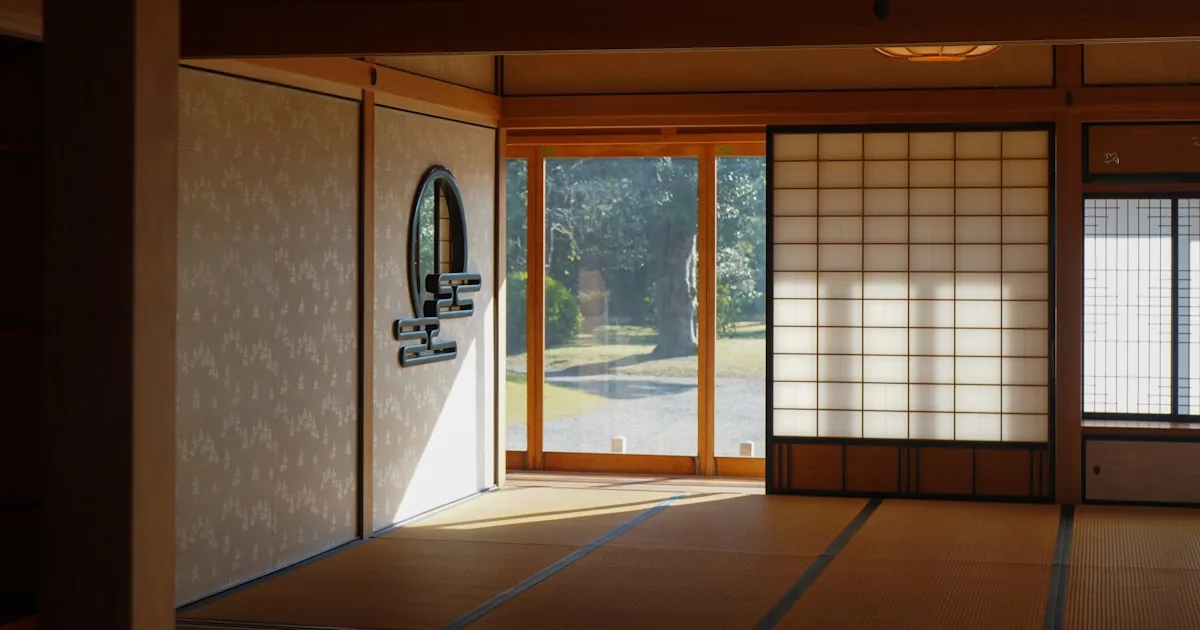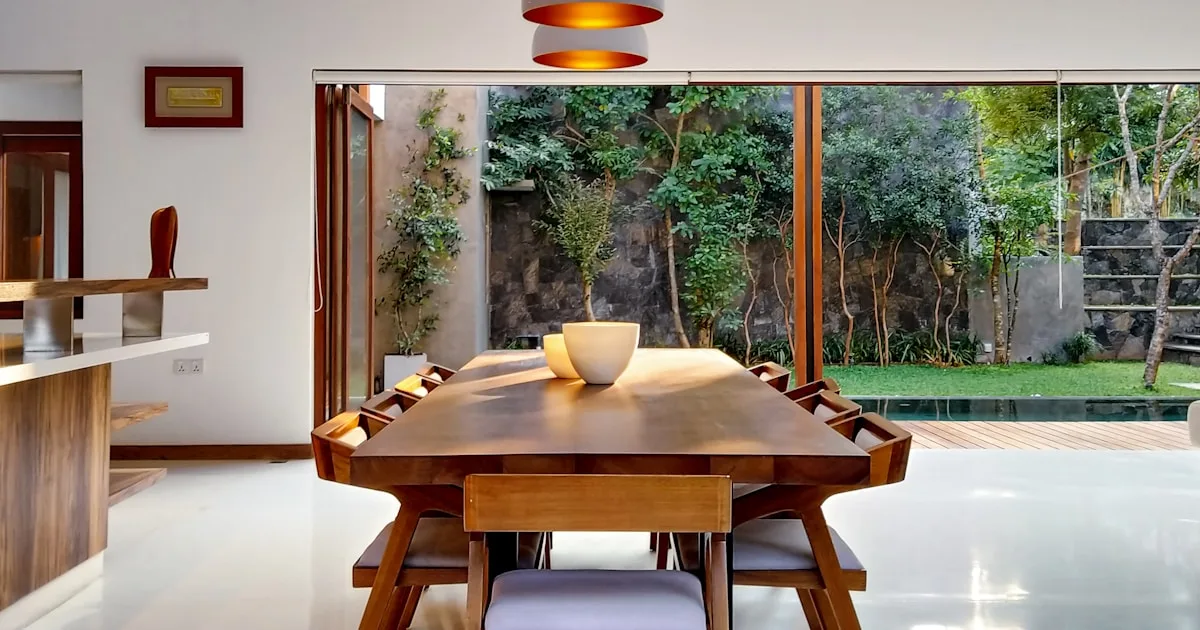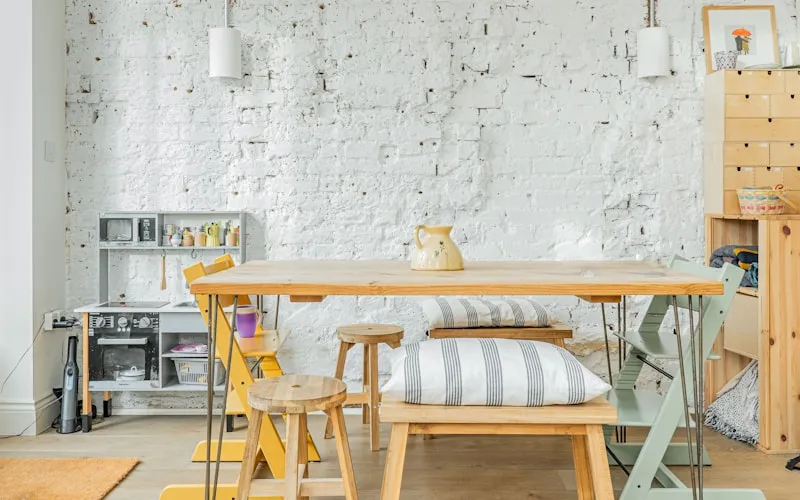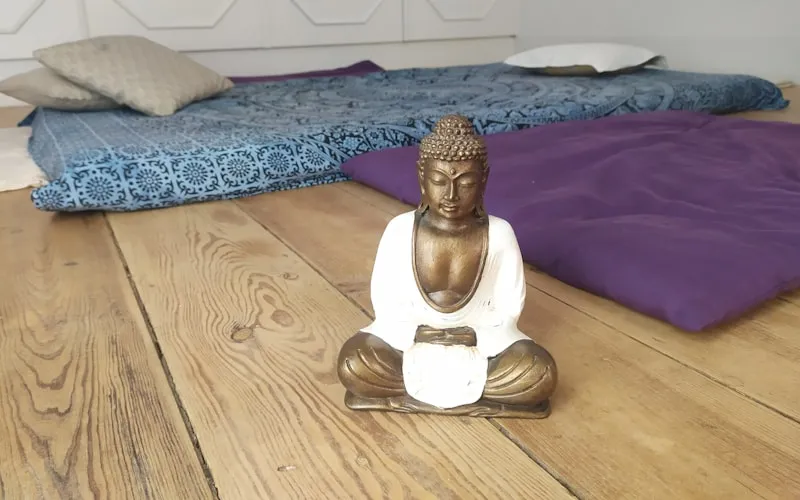
Floor seating means living closer to the ground: a legless chair or firm cushion instead of a sofa, and a low table instead of a standard coffee table. It is how Japanese homes have arranged living rooms for centuries, and it is winning people over elsewhere for a simple reason: a room with low furniture feels bigger, calmer, and easier to share.
The good news is that you do not need to replace your sofa or commit a whole room. A floor-seating corner takes one good floor chair, a low table, a couple of cushions, and a rug, and it becomes the spot for tea, reading, games, and long conversations.
This guide covers what actually matters when you buy: how to choose a floor chair with back support that adults find comfortable, what height a low table should be, and how to layer the soft pieces so sitting on the floor feels like a treat rather than a compromise. Every piece mentioned is in stock in our natural wood furniture and tea ritual collections.
What Is Floor Seating, and Why Do Japanese Homes Sit on the Floor?
Floor seating is a way of furnishing a room where people sit at or near floor level, on cushions, mats, or low chairs, around a table that stands roughly knee-high. The best-known version is Japanese: a zaisu is a legless chair with a proper backrest that sits directly on the floor, a zabuton is the firm cushion you sit on, and a chabudai is the short-legged table they gather around.
Japanese homes traditionally sit on the floor for practical reasons. Tatami mat floors are soft, clean, and comfortable to sit on. Low furniture is light and easy to move, so one room can serve as a living room by day and a bedroom by night. And sitting at floor level suits shared, face-to-face meals and tea.
The same logic works in a Western home:
- The room feels larger. Low furniture leaves the upper half of the room open, so even a small space feels airy.
- It is naturally social. Everyone sits at the same level around one table, which suits games, long dinners, and tea.
- It is flexible. Cushions stack, folding chairs tuck away, and the corner turns back into open floor in a minute.
- It changes the pace. Sitting low slows you down. It suits reading and conversation more than scrolling.
If you like the calm, spare look this creates, it pairs naturally with Japandi and zen interior design.
How to Choose a Floor Chair with Back Support

The floor chair is the piece that decides whether adults actually use the setup. Sitting unsupported on a cushion is fine for twenty minutes; a legless chair with a real backrest is comfortable for a whole evening. Here is what to look for.
A firm, angled backrest. The whole point of a floor chair over a plain cushion is back support. Look for a backrest tall enough to reach your mid-back and angled slightly backward, so you can lean into it the way you would a normal chair.
A padded, wide seat. Your weight rests on the floor, so the seat needs enough padding that your hips do not feel it after an hour. Wider is better, since it lets you shift and cross your legs.
Solid construction. A floor chair takes more twisting load than a normal chair because people lean, shift, and push off it to stand. A solid wood frame outlasts a cheap folding mechanism.
Our Minimalist Leisure Floor Chair RIVO (649.99 EUR) is built exactly for this: a supportive angled backrest on a solid frame, with clean lines that look like furniture rather than camping gear. One good floor chair for whoever needs the most support, plus cushions for everyone else, is the setup most homes land on.
If you need it to disappear: folding floor chairs store flat in a cupboard, which suits a corner that is only sometimes a seating area. The trade-off is a thinner seat and a less solid feel, so use them as the extra seats, not the main one.
The Low Table: Getting the Height Right

Every floor-seating area is arranged around a low table, and height is the detail that makes or breaks it. A standard coffee table, at roughly 45 cm, is too tall to use comfortably from the floor. A Japanese tea table sits much lower: traditional chabudai run from about 15 to 30 cm tall, which puts the top at a natural height for someone sitting cross-legged.
Two of ours fit this range exactly:
The Japanese Minimalist Round Coffee Table (329.99 EUR) is a solid wood round low table sized for a floor-seating circle. Round matters more here than with standard-height tables: there is no head of the table, no corners to knock knees on, and everyone sits an equal distance from the middle.
The Rustic Tea Ritual Table (139.99 EUR) is a smaller, lower table made for the classic use of a floor-seating corner: tea. It holds a teapot, cups, and a tray, and moves wherever the corner is today.
If tea is the point for you, finish the table with a Handmade Walnut Wood Tea Tray (59.99 EUR) and a Traditional Japanese Cast Iron Teapot (49.99 EUR) from our tea ritual collection. A low table with a tea setup on it invites people to sit down in a way an empty surface never does.
Cushions, Rug, and the Soft Layer

Floor seating lives or dies on what is between you and the floorboards. The Japanese answer is tatami; the practical Western answer is a good rug plus firm cushions, layered in this order.
Start with a natural-fiber rug. The rug defines the seating area and takes the chill and hardness out of the floor. Jute is ideal here: firm, textured, and flat enough that cushions and a low table sit stably on it. The Handmade Braided Jute Rug JUNDA (119.99 EUR) suits a corner; go one size larger than feels necessary, because every part of the rug is furniture in a floor-seating room. For a softer sit, layer a wool rug over the jute.
Add firm floor cushions. Soft bed pillows collapse under a sitting adult. You want firm, flat cushions in the spirit of a zabuton. Our linen pillow covers (39.99 EUR for a set of 2, also in other natural tones) over well-stuffed inserts give you seat cushions that hold their shape and wash easily.
Keep a stool or two at the edge. A low wood stool beside the rug works as a side table for drinks, a perch for anyone who cannot sit on the floor that day, and a riser for a lantern. The stackable Wood Lounge Stool (369.95 EUR) or any piece from our wooden stools fits the height of the room.
How to Build a Floor-Seating Corner, Step by Step
Here is the whole setup, in the order that works. This makes a corner of roughly two by two meters into a finished floor-seating area.
- Pick the corner. Near a window is best. Floor seating puts your eye line low, so a view of sky or greenery lands better than a view of skirting board and cables.
- Lay the rug. One large jute or wool rug, square or round, angled to the room rather than jammed into the corner if you want the area to feel deliberate.
- Place the low table in the middle. Everything else arranges itself around it.
- Set the seats. The floor chair faces into the room, cushions fill the other sides. Odd numbers of cushions look more relaxed than pairs.
- Light it low. Overhead light feels wrong when you sit at floor level. A bamboo lantern (119.99 EUR) at rug level, or any warm, low light from our lantern collection, puts the glow where the people are.
- Add one purpose. A tea tray, a stack of books, or a board game left on the table gives the corner a job, and a corner with a job gets used.
In a small home this corner can replace a second seating area entirely; our small living room guide covers how low furniture keeps a compact room open.
Is Floor Seating Comfortable? Honest Answers
The honest answer: yes, if you set it up properly, and it takes most people a week or two to adjust. A few things make the difference.
Support your back. This is the big one. Most people who say they cannot sit on the floor have only tried sitting unsupported. A zaisu-style chair with a firm backrest changes the experience completely, which is why we recommend buying one proper floor chair before anything else.
Sit on a cushion, not the bare floor. Raising your hips a few centimeters on a firm cushion makes cross-legged sitting easier on the knees and lets you sit longer without shifting.
Change position often. Cross-legged, side-sitting, legs under the table, one knee up. Moving between positions is normal and is actually part of the appeal: you move more sitting on the floor in an evening than you do sunk into a sofa.
Know who it is for. Floor seating suits people who can get up from the floor comfortably. For anyone who cannot, keep a stool or a normal chair at the edge of the rug so they are part of the circle at a height that works for them. A good setup includes everyone.
Give it two weeks. Hips and ankles adapt quickly with a little regular use. Most people find the corner becomes the default spot for tea and conversation once the novelty settles.
Keeping It Fresh Through the Year
A floor-seating area is the easiest furniture arrangement in the house to maintain and change, which is part of why it has lasted centuries.
- Rotate the cushions and wash the covers now and then. Linen covers soften with every wash and look better for it.
- Shake out and rotate the rug a few times a year so it wears evenly. Jute prefers to stay dry, so blot spills rather than soaking them.
- Wipe the wood with a dry or barely damp cloth, and re-oil the low table once a year to keep the grain rich. Use the tea tray under pots and cups so rings never start.
- Swap by season. Heavier wool layers and warmer lantern light in winter; bare jute, lighter covers, and a vase of dried stems on the table in summer. The bones of the corner never change, so a refresh costs one cushion cover, not a new sofa.
Because every piece is small and movable, you can also promote the whole corner to a different room in ten minutes, which is not something anyone says about a couch.
Floor seating is the rare furniture idea that costs less than the conventional option and gives you more: more open space, more flexibility, and a corner of the home that runs at a slower speed. The recipe is short: one floor chair with real back support, a low table at chabudai height, firm cushions on a natural rug, and warm light kept low.
Start with the RIVO floor chair and a low round table, then layer in the rug, cushions, and a tea setup as the corner finds its rhythm. Browse the full natural wood furniture collection to see everything in one place.
Frequently Asked Questions
Enjoyed this guide?
Share it with someone who'd find it useful