Zen interior design is more than an aesthetic - it is a philosophy of living translated into physical space. Rooted in Zen Buddhist principles of mindfulness, simplicity, and harmony with nature, this design approach creates rooms that actively support mental clarity, emotional calm, and present-moment awareness.
In an age of sensory overload - constant notifications, cluttered schedules, visual noise everywhere we look - Zen interiors offer a sanctuary. They are spaces where every object is chosen with intention, every material connects to the natural world, and every arrangement respects the power of emptiness. This guide walks you through the philosophy and practical application of Zen design, from meditation rooms to entire homes that breathe peace.
The Philosophy Behind Zen Interior Design
To design a Zen interior authentically, you need to understand the philosophical principles that guide it. These are not arbitrary aesthetic rules - they are expressions of a worldview that values presence, simplicity, and the beauty of impermanence.
Key Zen principles in design:
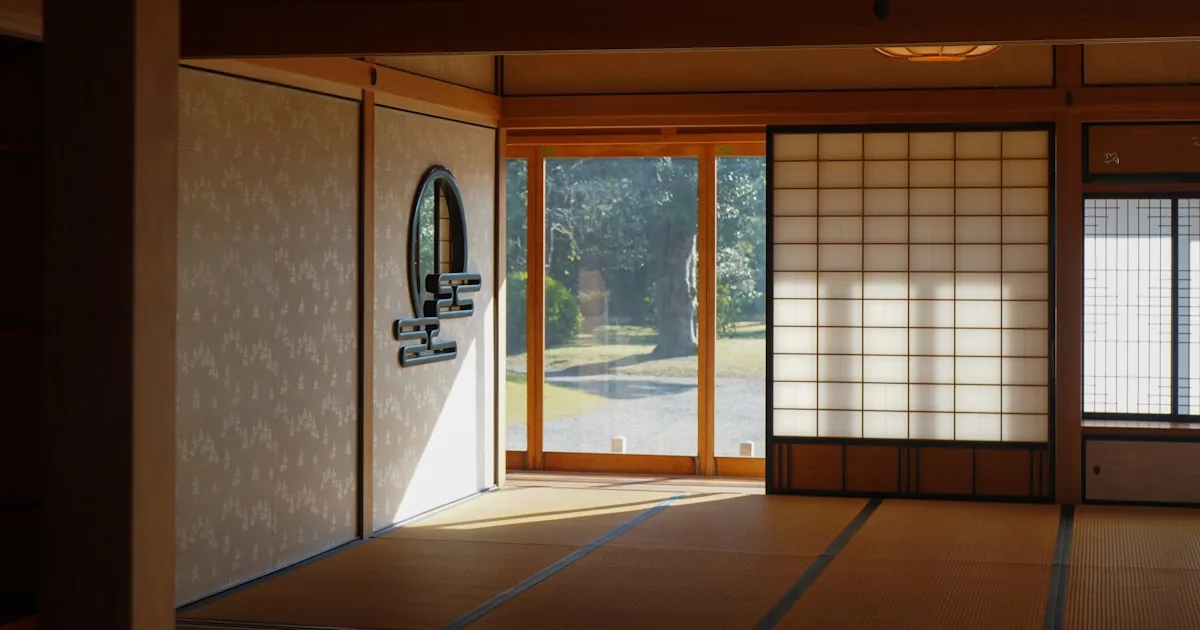
- Ma (negative space) - in Zen, the empty space in a room is not "unfilled" - it is an active, essential element. The space between objects allows each one to be fully seen and appreciated. Rooms breathe when they are not crowded.
- Wabi-sabi (imperfect beauty) - the appreciation of things that are imperfect, impermanent, and incomplete. A cracked ceramic bowl, a weathered wooden beam, a flower past its prime - these are not flaws but expressions of the passage of time.
- Kanso (simplicity) - the elimination of clutter and ornament to reveal the essential nature of things. Not minimalism for style's sake, but simplicity as a path to clarity.
- Shizen (naturalness) - design that does not feel forced or artificial but flows from natural materials, organic forms, and intuitive arrangement.
- Seijakujaku (tranquility) - the deliberate cultivation of stillness and peace in the environment, achieved through soft colors, gentle light, and the absence of visual stimulation.
These principles work together to create spaces that calm the mind rather than stimulate it. A Zen room does not demand your attention - it quietly supports your ability to be present.
The Zen Color Palette: Quiet and Grounded
Color in Zen design serves a functional purpose: it regulates the energy of a room. The palette is deliberately muted, drawing from the natural world to create an environment that soothes the nervous system.
Core palette:
- Soft white and cream - not stark, sterile white but the warm white of rice paper, undyed cotton, and lime plaster
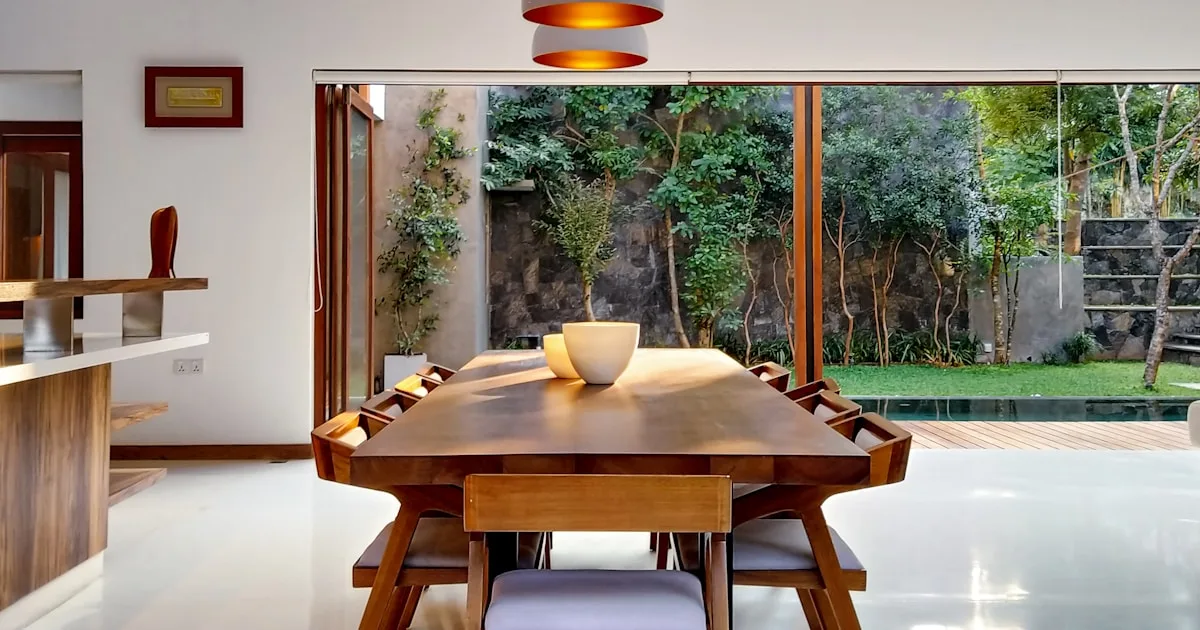
- Natural wood tones - from pale ash to deep walnut, the warm browns of wood are the most grounding colors in Zen interiors
- Stone gray - the quiet gray of river stones and weathered concrete, used for floors, counters, and accent walls
- Sand and clay - warm, earthy beige tones that connect the interior to the landscape
Accent tones (used sparingly):
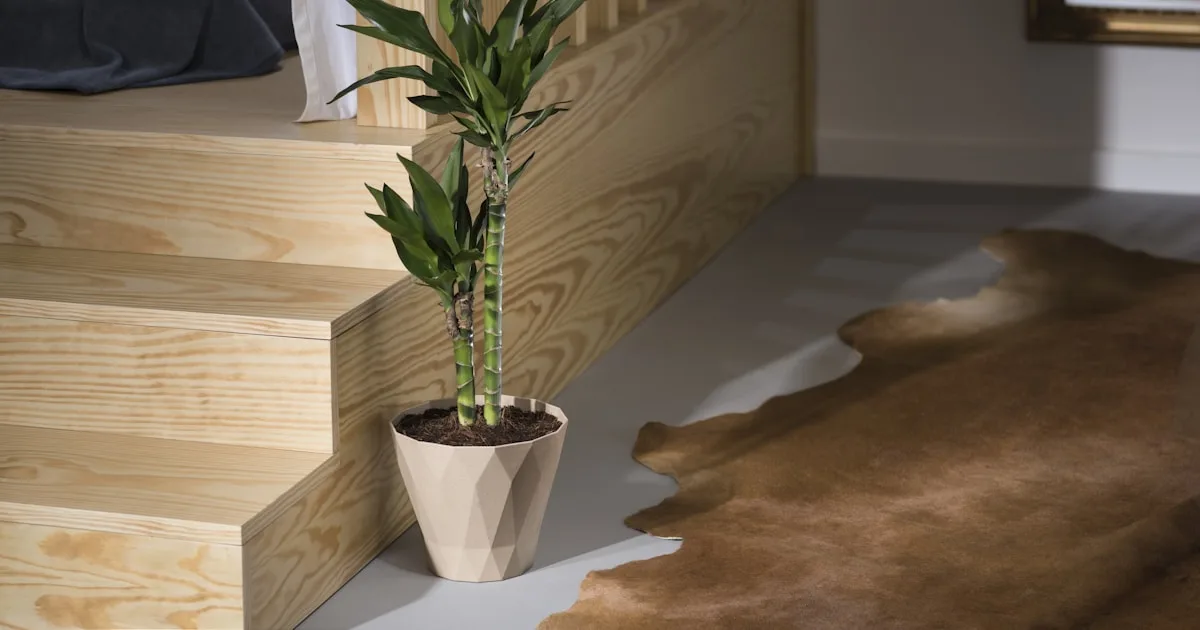
- Forest green - the muted green of moss and ferns, often introduced through living plants
- Charcoal - deep, dark gray for grounding contrast, used in small doses
- Warm black - not cold, blue-black but a brownish black, as seen in ink wash paintings and lacquerware
The key rule is: no color should demand attention. Everything in the palette should recede, creating a background of calm against which simple objects - a ceramic vase, a wooden bowl, a green branch - can be appreciated fully. If a color makes you look at the wall instead of through it, it is too strong for a Zen space.
Materials: Honoring Nature and Craftsmanship
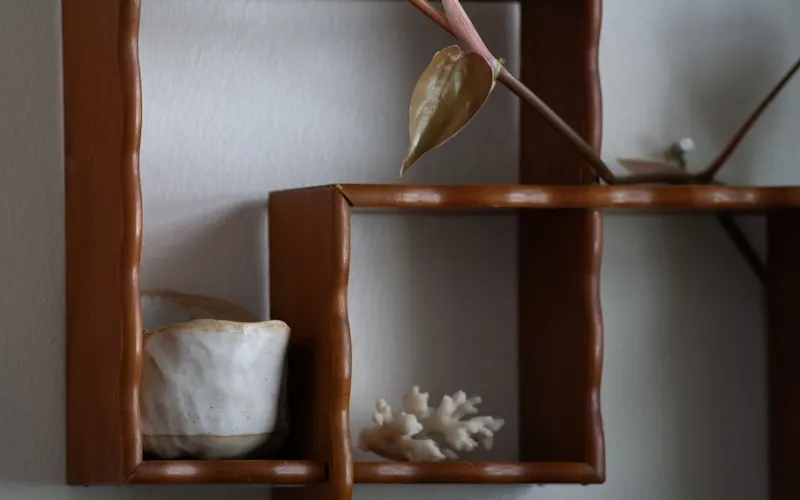
In Zen design, materials are not merely functional - they are a bridge between the human-made and the natural world. Every material should feel like it came from the earth and could return to it.
Wood is sacred in Zen interiors. It is used for structure, furniture, flooring, and decorative objects. The grain should be visible and celebrated - it is a record of the tree's life, and hiding it disrespects the material. Light, unfinished woods like cypress, cedar, and ash are traditional, though darker woods like walnut add warmth. Our artisan wooden stools exemplify this philosophy - each piece celebrates the natural grain and character of the wood.
Bamboo and rattan are essential Zen materials. Lightweight, renewable, and beautifully organic in form, they appear as furniture, screens, light fixtures, and decorative elements. Rattan furniture - with its visible weave and natural imperfections - embodies both the wabi-sabi and shizen principles of Zen design.
Stone connects interiors to the geological world. Smooth river stones, rough granite, polished slate - each type of stone brings its own texture and story. In Zen spaces, stone appears as flooring, tabletops, garden elements, and individual display objects.
Ceramic and pottery represent the transformative power of earth and fire. Handmade ceramics - especially those with visible irregularities, uneven glazes, or deliberate cracks (kintsugi, the art of repairing with gold) - are prized in Zen interiors for their wabi-sabi beauty.
Natural textiles - undyed cotton, raw silk, and linen - provide softness without artifice. Their subtle color variations and organic texture are preferred over uniform, synthetic fabrics.
Designing a Meditation Room or Zen Corner
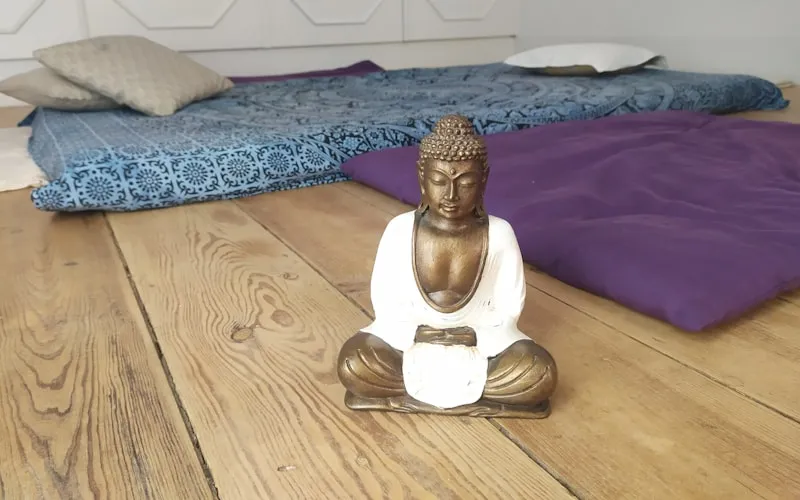
A dedicated meditation space is the purest expression of Zen interior design. Even a small corner can become a powerful sanctuary for mindfulness practice.
Essential elements of a meditation space:
- A clear, uncluttered floor - the meditation seat should be the only object in the immediate area, surrounded by open space (ma)
- A meditation cushion (zafu) or low seat - placed on a natural-fiber mat. A low wooden stool can also serve as a meditation bench
- A focal point - a single object for the gaze to rest on: a candle, a stone, a small ceramic bowl, or a branch in a simple vase
- Natural light or very soft artificial light - harsh lighting disrupts meditation. Sheer curtains that filter sunlight, or a single warm-toned lamp, create the right atmosphere
- Natural scent - incense, dried sage, or a small bowl of dried herbs provide gentle olfactory grounding
The tea connection: The Japanese tea ceremony (chanoyu) is deeply intertwined with Zen practice. A tea ceremony setup - a beautiful teapot, handmade cups, a wooden tray - can serve as both a meditation focal point and a mindful daily ritual. The act of preparing and drinking tea with full attention is itself a Zen practice.
For a dedicated room: Keep the walls bare or adorned with a single piece of calligraphy or brush painting. Use tatami mats or a natural-fiber rug on the floor. Include a low, simple altar or shelf for a candle, incense, and one or two meaningful objects. The room should contain nothing that does not directly support the practice of stillness.
Zen Furniture: Low, Simple, Intentional
Furniture in Zen interiors follows a clear hierarchy: ground-connected, minimal in number, and exquisite in quality. Every piece must justify its presence.
Key characteristics:
- Low profiles - Zen furniture sits close to the ground. Low platform beds, floor-level tables, floor cushions, and low benches create a sense of groundedness and humility. Being closer to the earth is both a physical and philosophical choice.
- Simple, honest construction - visible joinery, natural finishes, and forms that reveal how the piece was made. Zen honors craftsmanship by displaying it rather than concealing it.
- Natural materials - solid wood, rattan, bamboo, stone, and natural fabric. Nothing synthetic, nothing that pretends to be something it is not.
- Multifunctionality - a wooden stool that serves as seating, a side table, and a display stand. A chest that provides both storage and a surface. In Zen spaces, fewer objects doing more is always preferred.
What to avoid: Overstuffed, oversized furniture that dominates the room. Pieces with excessive ornamentation or trendy details. Anything that draws attention to itself rather than harmonizing with the whole. In Zen design, the best furniture is felt more than noticed - it supports your activities without imposing its presence.
Arrangement: Leave generous space between furniture pieces. A room that is 60% empty and 40% furnished feels more Zen than one that is 80% furnished and 20% empty. The emptiness is not absence - it is the presence of peace.
Zen Design Throughout the Home
Living Room: A low sofa or floor seating arrangement with a simple wooden coffee table. One statement piece of art or a scroll on the wall. A single green plant in a ceramic pot. A rattan accent piece for texture. Open floor space is maintained - resist the urge to fill every gap. Lighting is soft and warm, provided by a handcrafted lamp and candles.
Bedroom: A low platform bed with crisp, natural linen bedding in white or soft neutral tones. Bedside tables are minimal - a low wooden shelf or a stool holding only a lamp and perhaps a book. Closets are organized and concealed. The bedroom in Zen design should contain nothing that reminds you of work, obligations, or the outside world.
Kitchen: Clean, uncluttered countertops with hidden storage. Only the most essential tools visible - and those should be beautiful in their functionality. A handmade tea set on a wooden tray becomes a display and a daily ritual. Natural wood shelving, ceramic containers, and simple linen towels.
Bathroom: The Zen bathroom draws from the Japanese ofuro (soaking tub) tradition. Natural stone or wood surfaces, a deep soaking tub if possible, minimal products neatly arranged, and plants that thrive in humidity. Every item visible should be necessary and beautiful.
Entryway: The transition space between the outside world and your sanctuary. A simple bench or stool for removing shoes, a single hook for a coat, and one meaningful object - a stone, a small plant, or a ceramic piece - to signal arrival into a peaceful space.
Living Zen: Daily Practices for a Mindful Home
A Zen interior is not just a style to be installed - it is a way of living that requires ongoing practice. The design supports the practice, and the practice sustains the design.
Daily maintenance rituals:
- Morning clearing - spend five minutes each morning putting everything back in its place. A Zen home stays minimal through consistent attention, not periodic purges.
- Mindful cleaning - in Zen tradition, cleaning is not a chore but a meditative practice. Sweep the floor with full attention. Wipe surfaces with awareness. The act of maintaining your space becomes the practice.
- Tea ceremony - a daily tea ritual using a beautiful tea set grounds you in the present moment. Boil the water, warm the pot, steep the leaves, pour with attention. This simple ritual transforms an ordinary moment into meditation.
- Seasonal rotation - change one or two decorative elements with the seasons. A branch of cherry blossoms in spring, a bowl of stones in summer, dried autumn leaves, a pine cone in winter. This practice connects your interior to the natural cycle.
The ongoing edit: Zen design is an ongoing process of subtraction more than addition. Regularly ask: does this object bring peace or agitation? Does this arrangement support stillness or create visual noise? Over time, your home naturally refines itself toward its most essential, most peaceful form.
Remember: the goal of Zen design is not a home that looks like a magazine photograph. It is a home that feels like a deep breath - a space where your mind naturally settles, your shoulders drop, and the present moment becomes enough.
Zen interior design is ultimately an act of generosity toward yourself and everyone who enters your home. By clearing away the excess and honoring the essential, you create a space that supports the most valuable thing any environment can offer: peace of mind.
Begin with subtraction. Remove what does not serve you - the objects, the visual clutter, the harsh lighting. Then slowly, intentionally add back what genuinely matters: natural wood and rattan that connect you to the earth, a tea set that anchors a daily ritual, and the open space that gives your mind room to settle.
The most Zen action you can take today is the simplest: choose one corner of your home, clear it completely, and place a single beautiful object there. Then sit with it. That feeling - of space, of quiet, of enough - is what Zen interior design is all about.
Frequently Asked Questions
Enjoyed this guide?
Share it with someone who'd find it useful