Greek interior design captures the essence of the Mediterranean - sun-bleached walls, the vivid blue of the Aegean Sea, warm terracotta earth, and the honest beauty of natural stone and wood. It is a style born from landscape and climate, shaped by centuries of island living where simplicity is not a choice but a way of life.
What makes Greek design so appealing beyond its native shores is its effortless warmth. These are interiors that feel luminous and airy yet deeply grounded. They celebrate natural materials, handcrafted objects, and a color palette drawn directly from the earth and sea. Whether you live in a coastal villa or a city apartment, Greek interior design principles can transform your space into a calm, light-filled retreat.
The Essence of Greek Interior Design
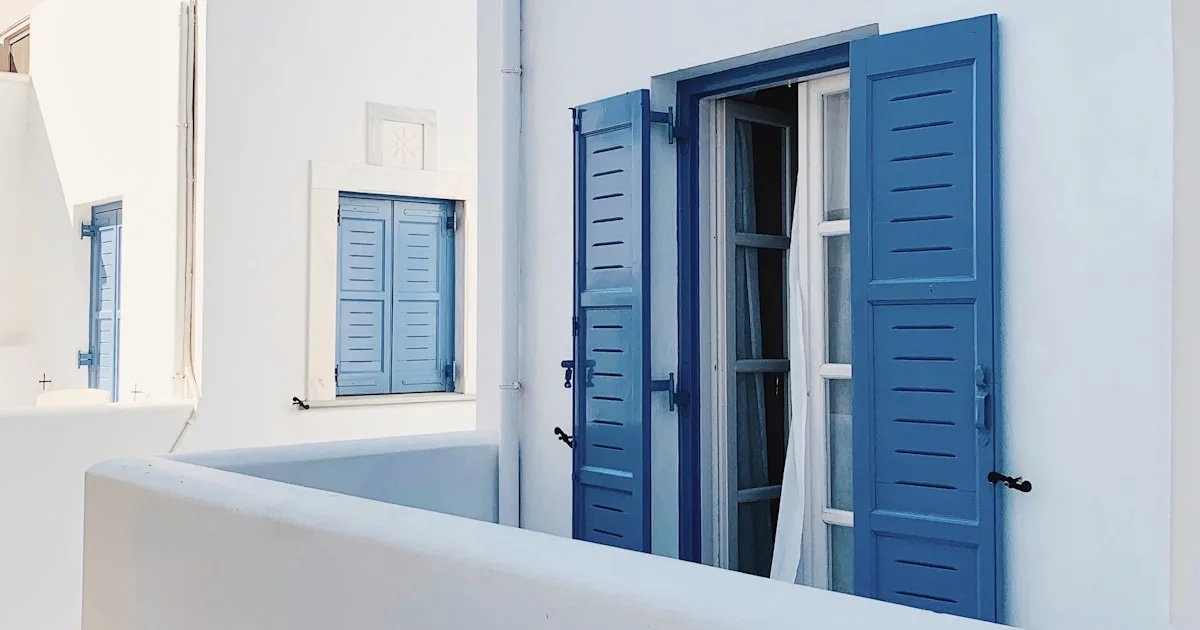
Greek interior design is inseparable from its environment. The blinding white of Cycladic architecture is not merely aesthetic - it reflects intense sunlight and keeps interiors cool. The blue-painted doors and shutters echo the sea and sky. The rough-plastered walls, stone floors, and timber ceilings are built from what the land provides.
This connection to place gives Greek interiors their authenticity. The core principles include:
- Light as a design element - Greek spaces maximize natural light through large openings, reflective white surfaces, and minimal window treatments
- Natural, local materials - stone, lime plaster, terracotta, olive wood, cotton, and linen dominate the material palette
- Simplicity of form - furniture is sturdy and unpretentious, with clean lines and visible construction
- Handcrafted character - hand-thrown pottery, hand-loomed textiles, and hand-carved wood give every surface a human touch
- Indoor-outdoor continuity - courtyards, terraces, and balconies are treated as extensions of interior rooms
The result is an aesthetic that feels simultaneously ancient and completely modern. Greek design strips away the unnecessary to reveal the beauty of light falling on a whitewashed wall, a single terracotta vase holding dried wildflowers, or a rough linen cloth draped over a wooden table.
The Greek Color Palette: White, Blue, and Earth
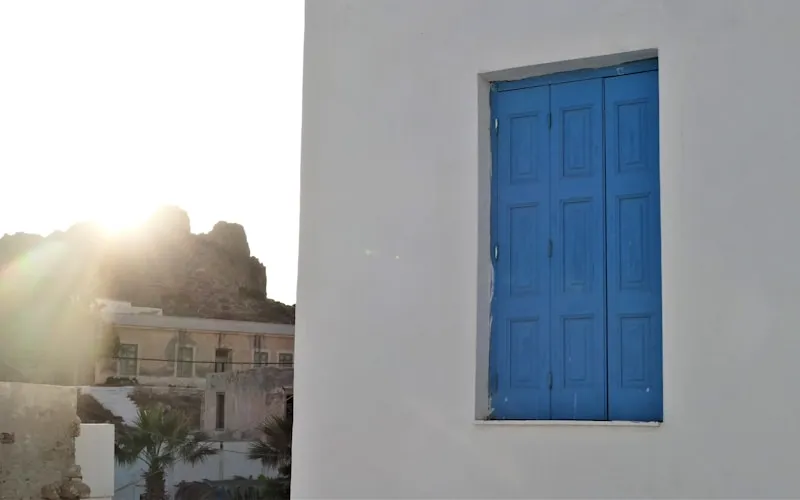
The Greek color palette is one of the most recognizable in the world, and its power lies in its simplicity and direct connection to the natural landscape.
The dominant white:
White is the foundation of virtually every Greek interior. Not a cold, clinical white but a warm, textured white - the slightly uneven surface of lime-washed plaster that absorbs and scatters light in a way that flat paint never can. This white makes rooms feel expansive, clean, and luminous. Use warm-toned whites (with hints of cream or stone) on walls, ceilings, and even floors for the most authentic effect.
Mediterranean blues:
- Aegean blue - the classic vivid blue of Santorini domes, used sparingly on doors, window frames, and accent furniture
- Soft sky blue - a gentler variant for textiles, cushions, and ceramic glazes
- Deep navy - used in smaller doses for contrast, particularly in fabrics and accessories
Earth tones:
- Terracotta and burnt sienna - the warm orange-brown of clay pots, roof tiles, and sun-baked earth
- Olive and sage green - the muted greens of olive groves and wild herbs
- Warm stone gray - the natural gray of limestone and granite, used for floors and countertops
The key to this palette is restraint in application. White dominates, blue provides punctuation, and earth tones ground the composition. A room that is 80% white, 10% blue accents, and 10% warm earth tones will capture the Greek feeling immediately.
Materials and Textures: The Soul of Greek Interiors
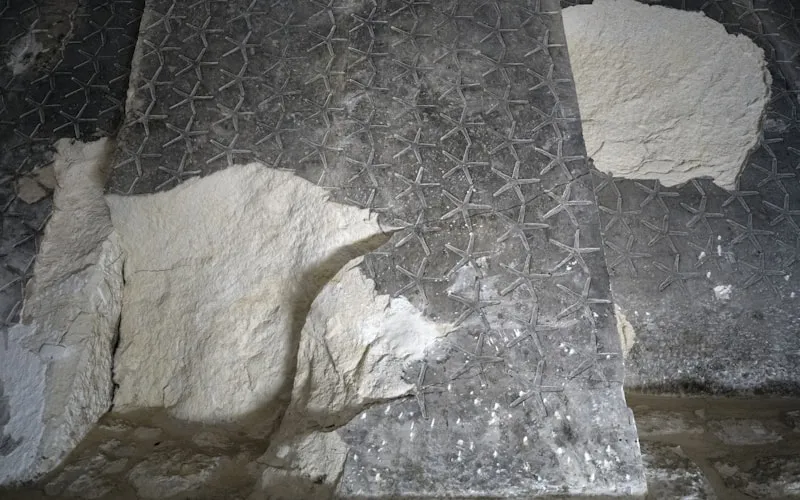
Materials in Greek interior design are honest, unrefined, and deeply textural. Every surface has a story told through its imperfections - the roughness of hand-troweled plaster, the grain of weathered olive wood, the uneven glaze of a hand-thrown pot.
Stone is foundational. Natural stone floors - limestone, marble, or slate - keep interiors cool and provide a connection to the earth beneath. Stone is also used for countertops, sinks, and even built-in seating niches, a traditional feature of Greek island homes.
Plaster and lime wash create the characteristic soft, textured walls. Unlike flat-painted drywall, lime-plastered surfaces have depth and movement. They absorb and reflect light differently throughout the day, making the walls themselves a living element of the design.
Terracotta appears everywhere - in floor tiles, roof tiles, plant pots, and decorative vases. Its warm, earthy tone is the perfect counterpoint to white walls and blue accents. Handmade terracotta pieces, with their slight irregularities, are essential to the Greek look.
Wood in Greek interiors is typically rustic and unfinished - olive wood, cypress, and reclaimed timber for beams, doors, shutters, and simple furniture. The wood is often left to weather naturally, developing a silvery patina over time.
Textiles are natural and unadorned. Hand-loomed cotton and linen fabrics in white, blue, and natural tones are used for bedding, curtains, tablecloths, and cushion covers. Woven rugs in flat-weave patterns add warmth to stone floors. The texture of hand-woven fabric against rough plaster walls is quintessentially Greek.
Greek-Style Furniture: Sturdy Simplicity
Furniture in Greek interiors is characterized by unpretentious solidity. Pieces are built to last from local materials, with minimal ornamentation and maximum functionality.
Key furniture characteristics:
- Simple wooden tables - sturdy dining and side tables with thick, honest legs and unfinished or whitewashed surfaces
- Built-in elements - plaster benches built into walls, niches for storage and display, and platform beds are hallmarks of traditional Greek homes
- Rush and cane seating - chairs with woven rush or cane seats paired with wooden frames are classically Greek and incredibly durable
- Iron accents - wrought iron beds, lighting fixtures, and hardware add structural elegance without excess
- Low, ground-connected pieces - low coffee tables, floor cushions, and daybeds reflect the relaxed Mediterranean lifestyle
For a sustainable take on Greek furniture style, pieces crafted from natural materials with visible handwork are ideal. Artisan wooden stools serve as versatile seating or side tables, while rattan pieces echo the woven-material tradition of Greek island homes.
Color-wise, furniture in Greek interiors is often whitewashed, left as raw wood, or painted in muted blue. The approach is relaxed - mismatched chairs around a dining table are perfectly acceptable and even preferred, adding the casual, lived-in feeling that defines Mediterranean life.
Light and Atmosphere in Greek Design
Light is perhaps the single most important element in Greek interior design. The intense Mediterranean sunlight shapes every design decision, from the white walls that reflect and amplify it to the deep-set windows that frame it.
Maximizing natural light:
Greek interiors use minimal window treatments - if any. Simple white linen curtains that filter light without blocking it are traditional. The goal is to let as much daylight in as possible, allowing it to play across textured walls and stone floors throughout the day.
Artificial lighting:
When the sun sets, Greek interiors rely on warm, intimate lighting. Candlelight is essential - groupings of simple white candles on tables, shelves, and in lanterns create the authentic Mediterranean evening atmosphere. For permanent fixtures, choose handcrafted lamps in natural materials - ceramic, woven fiber, or iron - that complement the artisanal quality of the space.
Pendant lights in woven materials or simple iron frames provide ambient illumination without competing with the architecture. Wall sconces in wrought iron or ceramic cast beautiful shadows on textured plaster walls.
Creating atmosphere:
The Greek atmosphere comes from sensory layering. Light is one element; others include the scent of dried herbs or olive wood, the texture of linen against skin, and the sound of a breeze through open shutters. Incorporate dried lavender, rosemary, and sage into your decor - they look beautiful in simple vases and scent the room naturally.
Creating Greek-Inspired Rooms
Living Room: White walls and a stone or whitewashed tile floor form the canvas. A low, comfortable sofa with white linen slipcovers, a rough-hewn wooden coffee table, and blue cushions establish the palette. Display a few handmade ceramic pieces on open shelving - terracotta bowls, a blue-glazed pitcher, and naturally shaped vases. A woven flat-weave rug in blue and white adds pattern underfoot.
Kitchen: The Greek kitchen is rustic and functional. Open wooden shelves display handmade pottery and everyday ceramics. A thick stone or wooden countertop, a simple farmhouse sink, and white or blue-painted cabinet fronts capture the island feel. Hang dried herbs from a beam or rack, and display olive oil in a beautiful bottle - function and decoration are one.
Bedroom: Keep it simple and serene. A wrought-iron or whitewashed wooden bed frame, crisp white linen bedding, and a single blue throw or cushion. Bedside tables can be simple stools or small wooden chests. A terracotta jug with dried flowers and a pair of ceramic lamps complete the scene.
Bathroom: Natural stone surfaces, a lime-plastered shower, simple white fixtures, and blue accents in towels and accessories. A wooden stool for towels, a ceramic soap dish, and a branch of dried eucalyptus create a spa-like Greek atmosphere.
Outdoor Spaces: The terrace or balcony is the heart of Greek living. Whitewashed stone or tile flooring, simple wooden or iron furniture, cotton cushions in blue and white, terracotta pots overflowing with bougainvillea, and candle lanterns for evening. This is where meals happen, conversations unfold, and life is truly lived.
Adapting Greek Design for Any Climate
You don't need to live on a Greek island to capture its design spirit. The principles translate beautifully to any setting with thoughtful adaptation.
In cooler climates: Layer more textiles for warmth - add wool throws, thicker linen curtains, and woven rugs to insulate stone or tile surfaces. Swap pure white for warmer whites and creams. Use more warm-toned wood to balance the coolness of stone. Natural linen and cotton textiles in heavier weights bring the Greek textile tradition to colder homes.
In apartments and urban spaces: You don't need actual plaster walls - textured paint techniques can mimic lime wash convincingly. Choose a few key Greek elements: terracotta pots, blue and white ceramics, linen textiles, and natural wood. Even two or three well-chosen pieces can shift a room's character toward the Mediterranean.
Sustainable sourcing: Greek design's reliance on natural, handcrafted materials aligns perfectly with sustainable living. Choose locally made pottery rather than imported reproductions. Seek out artisan accessories and handmade ceramics that support traditional craft traditions. Use natural fabrics instead of synthetic alternatives. The authenticity of handmade objects is what gives Greek interiors their soul - and supporting artisans keeps these traditions alive.
The essence of Greek interior design is not about replicating a specific look but about embracing its values: simplicity, honesty in materials, connection to nature, and the belief that a beautiful home needs very little - just the right light, the right textures, and the right sense of ease.
Greek interior design reminds us that the most beautiful spaces often require the least. White walls, honest materials, the colors of the sea and earth, and handcrafted objects that carry the warmth of human touch - these are the ingredients of interiors that feel both timeless and alive.
Start with the foundations: paint your walls in warm white, choose natural stone or tile for floors, and strip away unnecessary clutter. Then layer the Greek character - terracotta vases, linen textiles, blue accents, handcrafted lighting, and ceramic accessories that show the maker's hand.
The result will be a home that captures the Mediterranean's greatest gift: the art of living simply, surrounded by light and beauty.
Frequently Asked Questions
Enjoyed this guide?
Share it with someone who'd find it useful