Organic modern interior design sits at the intersection of two powerful impulses: the contemporary desire for clean, uncluttered spaces and the human need to surround ourselves with natural materials, curved forms, and the warmth of living things. It's the style for people who love modern design's clarity but find strict minimalism too cold, too angular, too disconnected from the natural world.
Where conventional modern design celebrates straight lines, industrial materials, and machine precision, organic modern softens every edge. Sofas curve. Tables have rounded corners. Materials are warm and natural - solid wood with visible grain, handwoven rattan, natural stone, linen, and wool. The palette is drawn from earth and sky rather than from a color chart. The result is a space that feels both designed and discovered - as if nature and architecture reached an agreement.
This guide explores how to create organic modern interiors that balance contemporary refinement with natural warmth, curved beauty with functional simplicity.
What Is Organic Modern Design?
Organic modern is a design approach that brings natural forms, materials, and warmth into contemporary architecture and furniture design. It emerged as a reaction to the cool, angular minimalism that dominated modern interiors in the 2000s and 2010s - recognizing that while people appreciate clean, uncluttered spaces, they also need warmth, texture, and connection to the natural world.
Defining characteristics:
- Curved and organic forms - rounded sofas, oval tables, arched doorways, kidney-shaped shelving, and free-form sculptural objects that echo natural shapes rather than geometric precision
- Natural material warmth - solid wood, stone, clay, linen, wool, and rattan replacing the glass, chrome, and lacquer of conventional modern design
- Warm neutral palette - cream, sand, taupe, warm gray, clay, and mushroom tones drawn from the natural landscape rather than cool whites and stark contrasts
- Handcrafted texture - artisan ceramics, handwoven textiles, and naturally textured surfaces that show the mark of human hands or natural processes
- Contemporary simplicity - the uncluttered, thoughtfully edited quality of modern design, with each piece earning its place through both function and beauty
- Nature integration - plants, natural light, views of landscape, and materials that connect the interior to the outdoors
The key tension: Organic modern design succeeds by holding two ideas simultaneously: the modern conviction that less is more, and the organic understanding that warmth and nature are essential to human comfort. It doesn't compromise by averaging these positions - it achieves both. A room can be uncluttered AND warm. A piece of furniture can be clean-lined AND natural. A palette can be restrained AND earthy.
This dual quality is why organic modern has become one of the most popular interior design approaches of the 2020s - it offers the calm and clarity people want without sacrificing the warmth and connection they need.
The Principles: Curved Forms, Natural Materials, Neutral Tones
Principle 1: Curves over angles.
Organic modern design replaces the right angles and straight edges of conventional modernism with curves inspired by natural forms. This isn't decorative curvature for its own sake - it's a fundamental shift in how forms relate to the human body and the natural world.
Curved sofas follow the natural gathering pattern of conversation. Rounded dining tables eliminate hierarchical head-of-table positioning. Arched doorways soften transitions between spaces. Free-form coffee tables echo the organic shapes of stones or pools. Even storage pieces - credenzas with rounded ends, bookcases with curved shelving - replace angular geometry with flowing form.
The curves in organic modern design are subtle and sophisticated, not exaggerated. A sofa's arms round gently rather than swooping dramatically. A table's edge softens rather than undulates. The goal is spaces that feel naturally comfortable rather than architecturally showy.
Principle 2: Natural materials with visible character.
Every material in an organic modern interior should connect to the natural world. Solid wood with visible grain - not painted, not lacquered, not hiding its nature. Natural fiber rugs in wool, jute, or sisal. Linen upholstery and curtains. Stone or clay surfaces. Rattan and woven plant fibers in furniture and accessories.
Critically, these materials should show their character rather than being processed into anonymity. Wood grain should be visible and celebrated. Stone should show its natural variation. Textile weave should be apparent. This material honesty - letting materials be themselves - is what gives organic modern spaces their warmth and authenticity.
Principle 3: Warm neutral palette.
The organic modern palette derives from nature rather than from trend forecasting. Warm whites (never cool blue-white). Sand and cream. Warm clay and terracotta tones. Mushroom and stone grays. Olive and sage greens (the only color beyond neutrals that consistently appears). These tones layer and blend the way they do in a natural landscape - quietly, harmoniously, creating depth through subtle variation rather than contrast.
Color, when it appears, is muted and nature-derived. A deep forest green accent. Terracotta in a ceramic vase. The warm amber of natural wood. Organic modern spaces rarely include bright, saturated, or artificial-feeling colors - the palette should feel like something you'd find on a walk through a forest or along a beach.
Materials & Textures in Organic Modern Design
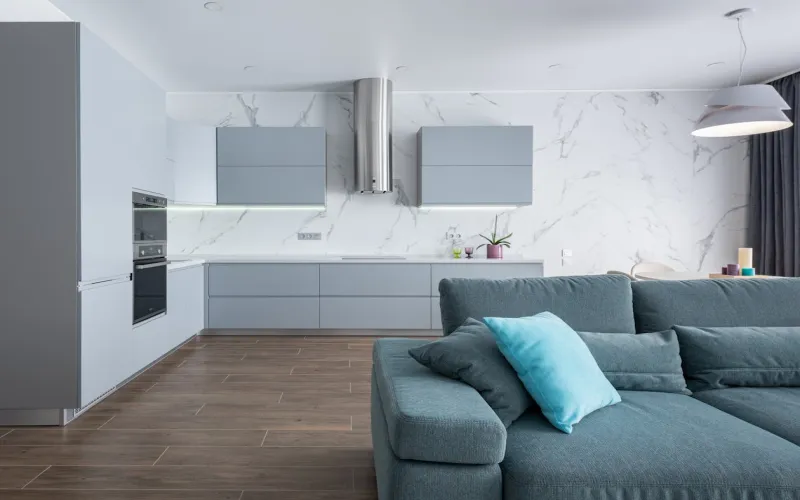
Material selection is where organic modern design most clearly distinguishes itself from other contemporary styles. Every surface and object should feel connected to the natural world.
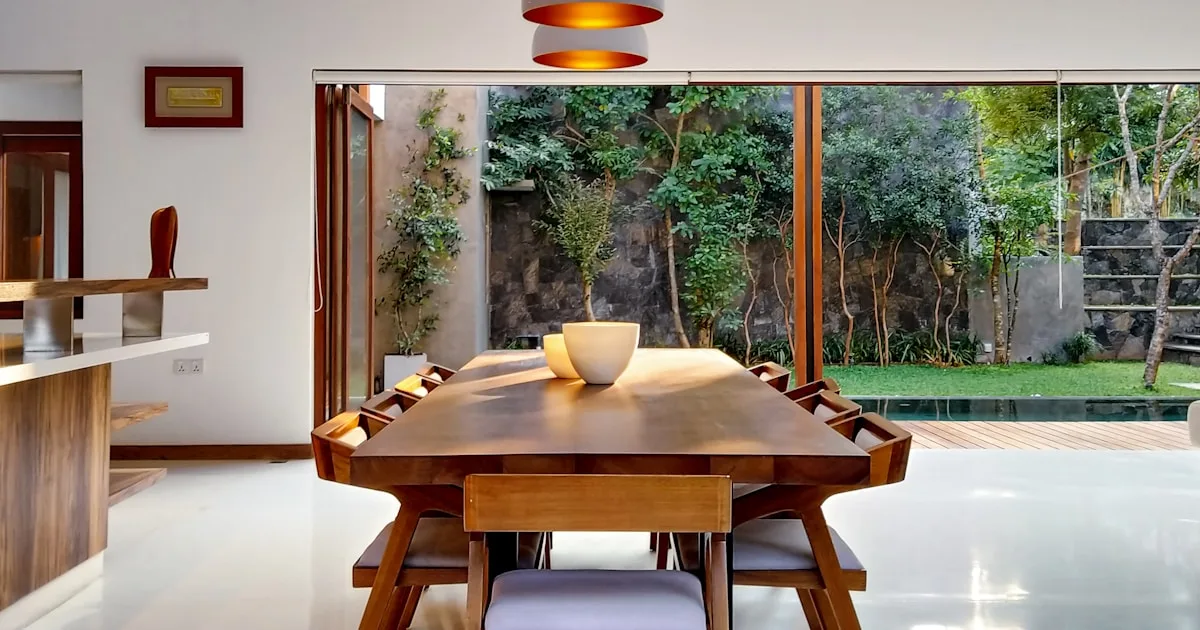
Wood. The dominant material in organic modern interiors. Oak, walnut, ash, and teak in their natural finishes - oiled, waxed, or clear-sealed to protect while preserving the wood's natural color and grain. Live-edge tables and counters (where the natural, bark-side edge of the wood is preserved) are signature organic modern pieces. Natural wood furniture - dining tables, sideboards, shelving - provides the warm foundation for everything else.
Stone. Natural stone in organic modern design tends toward warmer varieties - travertine, sandstone, and warm-toned marble rather than cool gray granite. Honed and matte finishes suit the style better than high-polish. Travertine and marble decorative objects bring stone's warmth to surfaces throughout the home.
Clay and ceramics. Handcrafted pottery is essential to the organic modern aesthetic. Artisan-made vases, bowls, and decorative objects in natural clay tones - terracotta, cream, charcoal, and olive - bring handmade warmth and organic form to shelves and surfaces. The slight irregularity of hand-thrown ceramics is prized, not avoided.
Woven natural fibers. Rattan furniture, woven baskets, jute and sisal rugs, and linen textiles provide the textural layer that prevents organic modern spaces from feeling too smooth or refined. These woven materials add visual warmth and tactile interest while reinforcing the connection to traditional craftsmanship.
Natural textiles. Linen, cotton, wool, and bouclé in undyed or naturally dyed tones. Organic modern textiles are about texture and quality rather than pattern - a nubby bouclé sofa, a chunky knit throw, a gauze linen curtain that filters light beautifully. When pattern appears, it's subtle and nature-derived: loose stripes, gentle waves, or organic spots rather than bold geometrics.
What to avoid. High-gloss surfaces, chrome and shiny metals (matte black or warm brass are acceptable), synthetic materials, bold patterns, and anything that feels manufactured rather than natural. The organic modern palette of materials should feel like it could have been gathered from the natural world.
Organic Modern Room by Room
The living room. An organic modern living room centers on a curved or rounded sofa in a warm neutral (cream bouclé, sand linen, or mushroom wool). A free-form coffee table in natural wood or stone. A textured area rug in jute, wool, or a blend. Floor-to-ceiling curtains in natural linen. Ceramic vases and sculptural objects on surfaces. Plants - a large fiddle-leaf fig or monstera as a living sculpture. Lighting that's warm and layered: a sculptural pendant or floor lamp in natural materials. The key: nothing in the room should feel angular, cold, or synthetic.
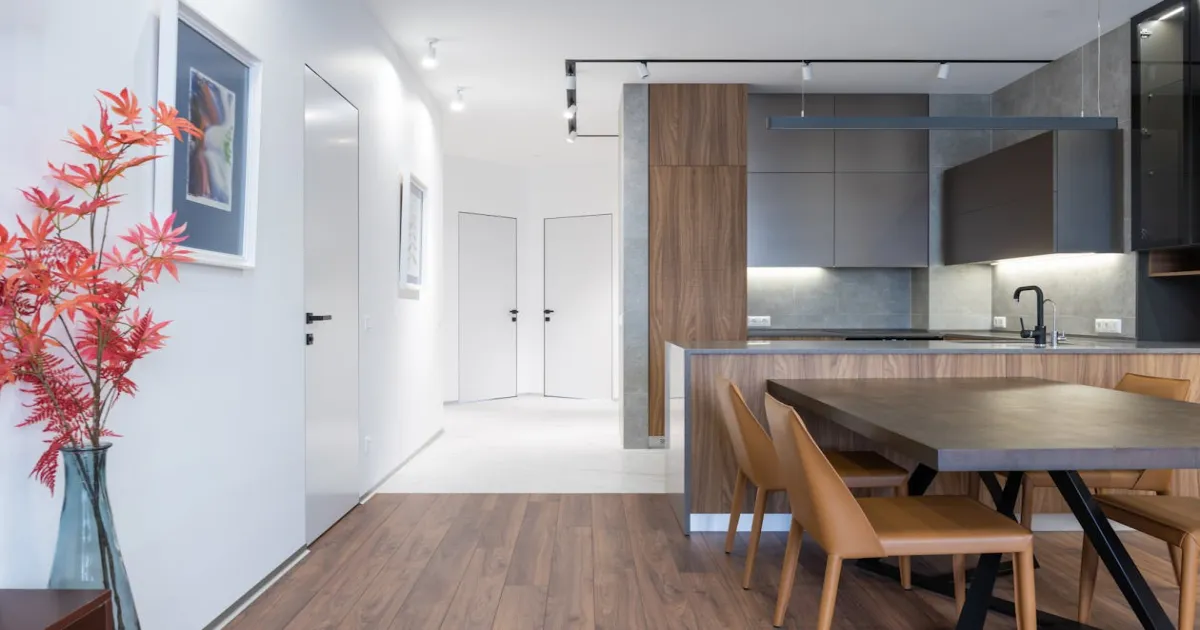
The kitchen. Organic modern kitchens balance contemporary functionality with natural warmth. Natural wood cabinetry (oak or walnut) with smooth, handleless fronts. A stone countertop in warm-toned marble or travertine. Open shelving displaying artisan ceramics and natural objects. A curved island if space allows. Matte fixtures in warm brass or brushed nickel. Woven baskets for fruit and bread. Herbs in terracotta pots. The kitchen should feel like a contemporary space made from nature's materials.
The dining room. An oval or rounded-edge dining table in natural wood - ideally live-edge or with visible grain character - seats conversation-friendly gatherings. Chairs with organic shapes: curved backs in wood, woven rattan, or upholstered in natural linen. A sculptural pendant light in natural fiber, wood, or matte ceramic. Table setting: stoneware plates, linen napkins, wooden serving boards, a low arrangement of foliage or dried botanicals in a handcrafted vase.
The bedroom. An organic modern bedroom is a warm cocoon. An upholstered bed frame with a gently curved headboard in natural linen or bouclé. Layered bedding in cream, sand, and warm white - linen sheets, a waffle-weave cotton blanket, a chunky knit throw. A wooden stool as a bedside table. A wool or sheepskin rug beside the bed. Minimal furniture: a low dresser in natural wood, perhaps a single sculptural lamp. Plants and a few natural candles complete the sanctuary.
The bathroom. Warm stone or wood-look tile (avoiding the cold feel of standard ceramic). A floating timber vanity. A stone basin or vessel sink. Matte brass fixtures. Open shelving with neatly rolled natural linen towels and potted trailing plants. If budget allows, a freestanding stone or concrete bathtub as the sculptural centerpiece. The organic modern bathroom should feel like a natural hot spring reimagined for contemporary living.
2026 Organic Modern Trends
Organic modern has evolved rapidly since entering mainstream design consciousness. Here's where the style is heading in 2026.
Sculptural furniture as art. Organic modern furniture is becoming more sculptural and ambitious in form. Coffee tables that look like natural rock formations. Shelving units that flow like water. Side tables shaped like tree stumps but finished with contemporary precision. These pieces blur the line between furniture and sculpture, making each room feel like a curated gallery of functional art.
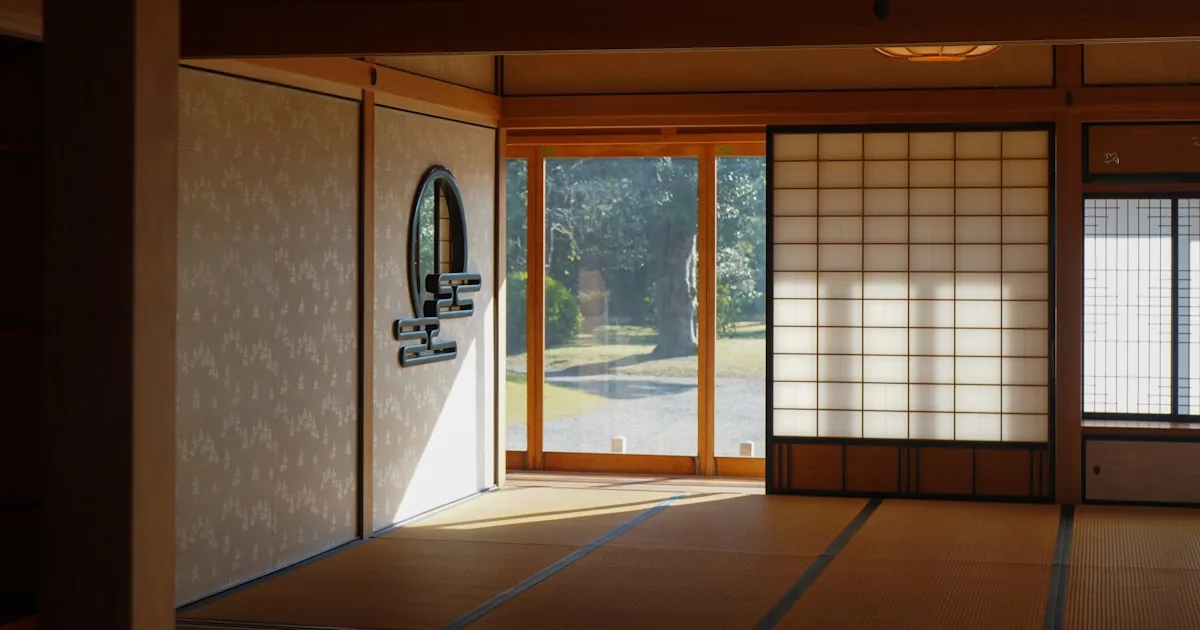
Raw and unfinished materials. The trend toward ever-more-natural materials continues. Raw plaster walls (not perfectly smooth), unlacquered brass that develops patina, unfired clay objects, naturally weathered wood, and unhemmed linen edges. This "raw luxury" celebrates material truth and the beauty of imperfection - connecting organic modern to the Japanese wabi-sabi tradition.
Earth-toned color deepening. While the organic modern palette remains warm and neutral, it's deepening beyond cream and sand. Rich clay, terracotta, warm chocolate, forest moss, and deep mushroom tones are appearing on walls, upholstery, and furniture finishes. These deeper tones create more intimate, enveloping spaces while maintaining the style's warm, natural character.
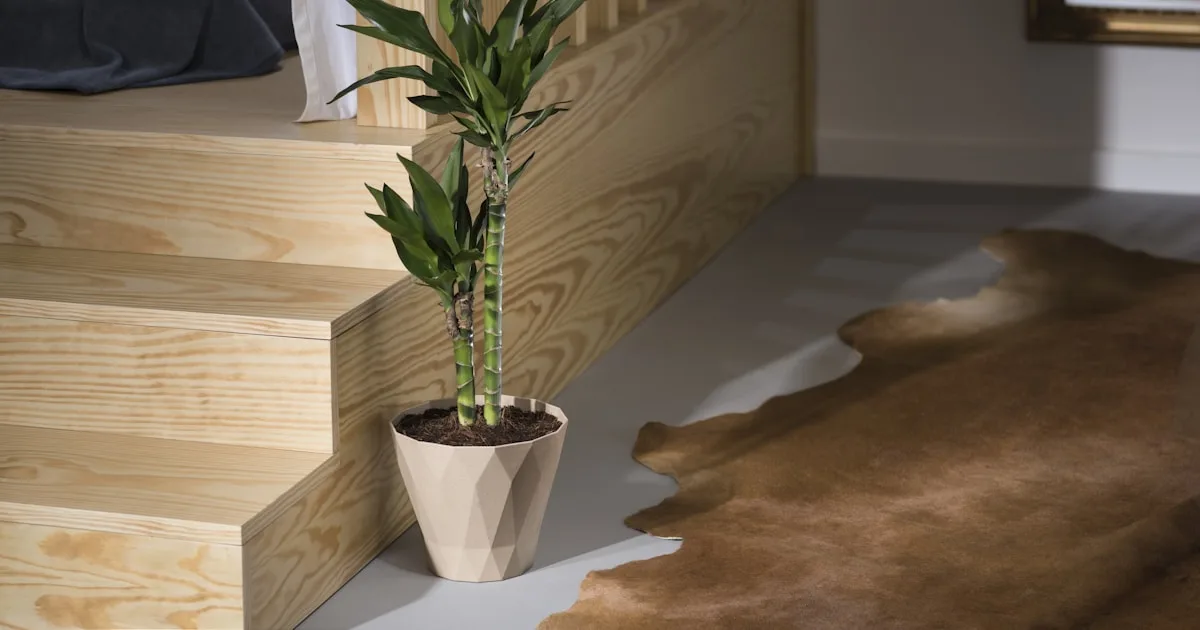
Biophilic integration. Plants in organic modern spaces are moving beyond decorative potted greenery toward integrated biophilic design - living walls, indoor trees as architectural elements, and garden views framed as art. The connection to nature is becoming more immersive, with organic modern homes designed around natural light patterns and seasonal change.
Artisan over manufactured. The preference for handcrafted objects over mass-produced ones is intensifying. Hand-thrown ceramics, hand-woven baskets, hand-carved wood bowls, and hand-loomed textiles are replacing manufactured alternatives. Each handmade object brings unique character and the subtle irregularities that connect a space to human creativity rather than machine efficiency.
Warm metals and tactile hardware. Matte brass, aged bronze, and warm copper are replacing chrome and polished nickel as the metal accents in organic modern spaces. Hardware - cabinet pulls, door handles, towel bars - is becoming more tactile and sculptural, with organic shapes replacing straight bars and circles. These small details reinforce the style's overall commitment to warmth and natural form.
Organic modern interior design offers a beautiful resolution to the tension between contemporary living and natural connection. You don't have to choose between a clean, well-organized space and one that feels warm, textured, and alive. Organic modern proves you can have both - and that the combination is more satisfying than either extreme alone.
The style succeeds because it's rooted in genuine human needs: the need for order and the need for nature, the desire for simplicity and the desire for warmth, the appreciation of design and the love of natural beauty. These aren't competing impulses - they're complementary, and organic modern brings them together.
Build your organic modern space with natural wood furniture as the warm foundation, rattan and woven pieces for handcrafted texture, natural fiber rugs for warmth underfoot, and artisan ceramics for the sculptural, handmade objects that make organic modern spaces come alive.
Frequently Asked Questions
Enjoyed this guide?
Share it with someone who'd find it useful