Victorian interiors represent one of the most visually rich and emotionally evocative design styles in history. Spanning Queen Victoria's reign from 1837 to 1901, the Victorian era produced interiors that were layered, ornate, and deeply expressive - rooms filled with pattern, color, and decorative objects that reflected the era's fascination with the natural world, distant cultures, and technological progress.
Today, Victorian interior design is experiencing a significant revival. Homeowners and designers are drawn to its warmth, maximalist beauty, and the sense of personality that Victorian rooms exude. Whether you live in an original Victorian home or want to bring Victorian elements into a modern space, this guide covers the essential principles, color palettes, materials, and styling techniques that define this iconic era of design.
The key to modern Victorian decorating is selectivity - taking the most beautiful elements of the era and combining them with contemporary comfort and handcrafted, natural materials.
Understanding Victorian Interior Design: Eras & Characteristics
Victorian design was not a single, static style - it evolved significantly over the 64 years of Queen Victoria's reign. Understanding these phases helps you identify which elements resonate most with your aesthetic.
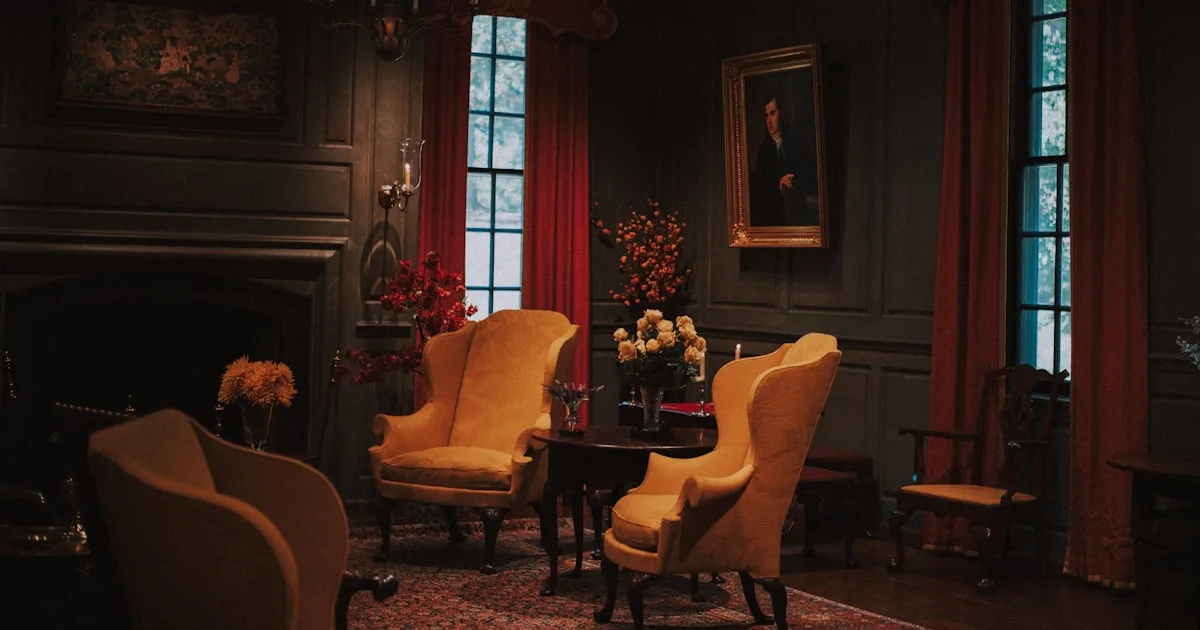
Early Victorian (1837-1860): Influenced by the Gothic Revival and Romanticism, early Victorian interiors featured dark woods, heavy drapery, Gothic arched motifs, and rich, somber colors. Rooms were cluttered and layered, reflecting the era's belief that empty space was wasted space.
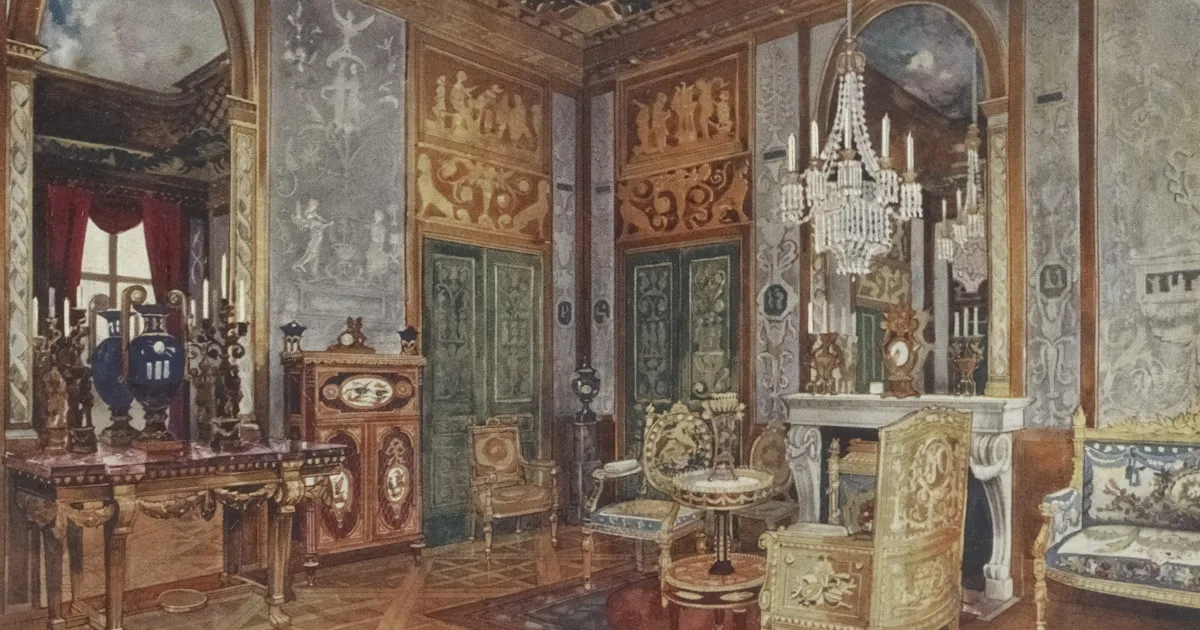
Mid-Victorian (1860-1880): The height of Victorian opulence. The Great Exhibition of 1851 had introduced global influences, and interiors became more eclectic - mixing Renaissance, Moorish, Japanese, and Classical elements. Colors grew richer, patterns more elaborate, and decorative objects more abundant.
Late Victorian (1880-1901): The Aesthetic Movement and Arts & Crafts movement brought a reaction against industrial excess. Late Victorian interiors became somewhat lighter, with a greater emphasis on handcraftsmanship, Japanese-inspired simplicity, and artistic unity. This period is often the most accessible for modern interpreters of Victorian style.
Universal Victorian characteristics across all periods:
- Layered textiles - Curtains with valances and under-curtains, upholstered furniture, cushions, antimacassars, and table covers created a soft, enveloping atmosphere.
- Rich color palettes - Deep reds, forest greens, warm golds, and royal blues dominated, often used in complex, multi-tone schemes within a single room.
- Ornamental details - Moldings, ceiling roses, carved woodwork, decorative tiles, and patterned wallpapers adorned every surface.
- Collections and displays - Victorians were avid collectors. Mantels, shelves, and tables were filled with vases, figurines, framed photographs, curiosities, and natural specimens.
- Mixed patterns - Florals, damasks, stripes, and geometric patterns were combined with surprising confidence, unified by a shared color palette.
The Victorian Color Palette: Rich, Jewel-Toned & Dramatic
Color is perhaps the single most defining element of Victorian interiors. Victorian rooms were not timid - they embraced deep, saturated, jewel-like colors that created an atmosphere of warmth, intimacy, and luxury.
The primary Victorian colors:
- Deep crimson and burgundy - The quintessential Victorian red. Used on walls, upholstery, and drapery, these rich reds create warmth and drama. A burgundy accent wall in a modern room instantly evokes Victorian grandeur.
- Forest green and bottle green - Deep, saturated greens that bring the conservatory spirit indoors. Victorian greens pair beautifully with gold accents and dark wood furniture.
- Royal blue and navy - Rich, confident blues that create sophisticated, almost nocturnal atmospheres. Particularly effective in dining rooms and libraries.
- Warm gold and amber - Used as both primary and accent colors, these tones bring sunlit warmth to otherwise deep palettes. Gold appeared in wallpapers, lamp bases, and decorative frames.
- Plum and aubergine - Luxurious purples that reflect the Victorian love of richness and exotic influences.
Supporting and transitional colors:
- Cream and antique white - Used for ceilings, trim, and to break up darker wall colors. Victorian whites are always warm, never stark.
- Sage and olive - Softer greens favored in late Victorian interiors and the Arts & Crafts movement. These muted tones offer a gentler entry point for modern homes.
- Dusty rose and mauve - Popular in bedrooms and ladies' parlors, these softer tones provided feminine contrast to the deeper male-coded colors of libraries and dining rooms.
In modern interpretations of Victorian color, you do not need to paint every wall in deep jewel tones. A single accent wall in deep green or burgundy, paired with cream or warm gray on the remaining walls, captures Victorian drama without overwhelming a space. The key is to include at least some rich, saturated color - this is what distinguishes Victorian interiors from every other decorating style.
Victorian Furniture: Ornate Forms & Quality Craftsmanship
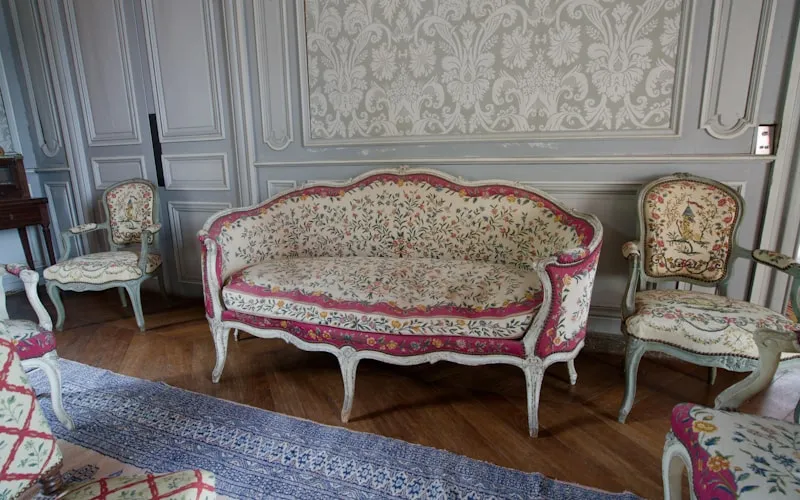
Victorian furniture is characterized by its solid construction, ornate carved details, and generous proportions. These were pieces built to last generations - and indeed, antique Victorian furniture remains sought after precisely because of its enduring quality.
Key furniture characteristics:
- Dark, richly grained woods - Mahogany, walnut, and rosewood were the preferred timbers. Their deep colors and figuring contributed to the overall richness of Victorian rooms.
- Carved ornamentation - Leaves, flowers, scrolls, and classical motifs were carved into chair backs, table legs, cabinet fronts, and mirror frames. The level of carving indicated the quality and cost of the piece.
- Substantial proportions - Victorian furniture tends toward the generous. Sofas are deep and heavily cushioned, dining tables are large and solid, and bookcases reach from floor to ceiling.
- Upholstered comfort - The Victorians pioneered comfortable seating. Button-tufted sofas, deeply padded armchairs, and upholstered ottomans reflected the era's emphasis on domestic comfort.
Adapting Victorian furniture principles for modern homes:
You do not need a house full of antique Victorian furniture to capture the style. The principles translate beautifully into modern interpretations:
Choose furniture with visible craftsmanship - pieces where the making is evident. Hand-turned wooden stools and handcrafted tables bring the Victorian appreciation for skilled workmanship into contemporary spaces.
Incorporate mixed materials - Victorians combined wood with upholstery, metal with glass, and stone with textiles. This material richness is easy to replicate by mixing natural rattan with wooden pieces and layered textiles.
Prioritize quality over quantity - One genuinely well-made piece has more Victorian spirit than a room full of flat-pack reproductions. Invest in fewer pieces that are built with care and natural materials.
Victorian Textiles, Wallpaper & Pattern Mixing
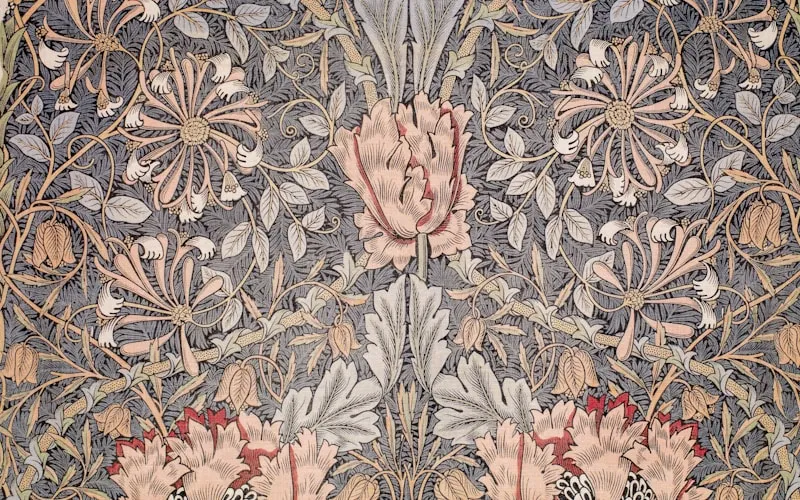
If there is one thing that defines Victorian interiors above all else, it is pattern - layered, mixed, and abundant. The Victorians had a love affair with decorative pattern that has never been matched, and their rooms were tapestries of wallpaper, upholstery, drapery, carpets, and decorative arts all working together in orchestrated visual richness.
Wallpaper:
Wallpaper was the crown jewel of Victorian decoration. William Morris's iconic designs - intricate floral and botanical patterns in rich, earthy tones - remain the gold standard. Victorian wallpapers typically featured dense, repeating patterns: florals, damasks, Acanthus leaves, and geometric motifs. In modern interpretations, a single wallpapered accent wall in a William Morris-inspired design can anchor an entire room.
Drapery and window treatments:
Victorian windows were elaborately dressed - often with multiple layers: a sheer under-curtain for daytime privacy, a heavier main curtain in rich fabric for evening, and a decorative valance or pelmet to crown the arrangement. Modern Victorian-inspired window treatments can simplify to two layers - a natural linen sheer paired with heavier colored curtains - while maintaining the layered spirit.
Upholstery fabrics:
Velvet was the quintessential Victorian upholstery fabric - rich, tactile, and available in deep jewel colors. Damask, brocade, and tapestry fabrics also featured prominently. For a modern Victorian sofa or armchair, a velvet in deep green, burgundy, or navy makes an immediate statement.
Carpets and rugs:
Victorian floors were covered with richly patterned carpets - typically Persian, Turkish, or Axminster designs with complex floral or geometric motifs in deep colors. A large, patterned area rug in warm tones is one of the easiest ways to bring Victorian character to a modern room.
The art of Victorian pattern mixing:
- Vary the scale - pair large-scale wallpaper with medium-scale upholstery and small-scale cushion fabrics
- Maintain a shared color palette - all patterns should draw from the same pool of colors
- Mix pattern types - combine florals with geometrics, stripes with damasks
- Use solid-colored elements as visual anchors - solid linen or velvet pieces between patterned ones prevent visual overload
Victorian Accessories & the Art of the Curated Display
The Victorians elevated the decorative display to an art form. Their mantels, shelves, tables, and walls were carefully arranged collections of beautiful and meaningful objects. This "more is more" approach to accessories is what gives Victorian rooms their characteristic personality and warmth.
The mantelpiece - the room's focal point:
In a Victorian interior, the fireplace mantel is the most important decorative surface. A classic Victorian mantel arrangement includes a large mirror or artwork as the centerpiece, flanked by matching vases or candlesticks, with a clock in the center and smaller decorative objects arranged symmetrically around it. Modern interpretations can loosen this formula - an artisan ceramic vase with dried flowers, a few collected objects, and a leaning piece of art creates a Victorian-inspired vignette with contemporary ease.
Ceramics and pottery:
The Victorians collected ceramics voraciously - Staffordshire figurines, blue-and-white transferware, art pottery, and decorative plates. A curated collection of handcrafted vases and ceramic objects displayed on shelves, mantels, and tables continues this tradition beautifully.
Lighting as decoration:
Victorian lighting was both functional and ornamental. Table lamps with colored glass or fabric shades, wall sconces, and elaborate chandeliers created the warm, layered light that characterizes these interiors. In modern Victorian-inspired spaces, choose lamps with character - handcrafted bases, textured shades, or interesting silhouettes. Layer multiple light sources at different heights to replicate the warm, ambient glow of the era.
Artwork and wall decor:
Victorian walls were densely hung with art - oil paintings, watercolors, prints, and mirrors in ornate gilded frames. The modern gallery wall owes its origin to Victorian picture hanging. Create a Victorian-inspired gallery with mixed frames, artwork, and perhaps a decorative mirror in an ornate frame.
Plants and nature:
The Victorians were passionate about bringing nature indoors. Ferns, palms, aspidistras, and flowering plants filled conservatories and parlors. Terrariums, Wardian cases, and collections of pressed botanical specimens reflected the era's scientific curiosity about the natural world. Lush houseplants remain one of the most effective ways to add Victorian character to any room.
Books and intellectual displays:
Well-stocked bookcases were status symbols in Victorian homes. Leather-bound volumes, globe maps, scientific instruments, and curiosity collections reflected the era's intellectual aspirations. A curated bookshelf with interesting objects interspersed among books captures this spirit perfectly.
Modern Victorian: How to Blend Victorian Style with Contemporary Living
The most successful modern Victorian interiors do not attempt to recreate a museum-perfect period room. Instead, they extract the most appealing Victorian principles and apply them with contemporary restraint and comfort.
Start with color: A single room or accent wall in a deep Victorian color - forest green, navy, burgundy, or plum - immediately establishes the mood. Keep surrounding walls in warm cream or soft gray for breathing room.
Layer selectively: Rather than covering every surface in pattern, choose one or two key moments - a wallpapered accent wall, patterned curtains, or a richly upholstered statement chair. Let the rest of the room breathe with simpler textures in natural materials.
Mix eras confidently: A Victorian velvet sofa paired with a simple wooden stool as a side table, or an ornate mirror above a clean-lined console table. The contrast between Victorian ornament and modern simplicity creates tension that feels dynamic and sophisticated rather than stuffy.
Embrace rich materials: Velvet, dark wood, brass, and glass are Victorian essentials that work beautifully in modern settings. Pair them with natural, handcrafted materials - rattan, handwoven textiles, and artisan ceramics - for a warm, eclectic result.
Curate your collections: The Victorian love of display translates perfectly into modern interiors when done thoughtfully. Rather than filling every surface, create two or three considered vignettes - a shelf arrangement of handcrafted vases and collected objects, a styled mantelpiece, or a gallery wall of mixed art.
Prioritize atmosphere over accuracy: Victorian interiors were, above all, atmospheric - warm, intimate, and emotionally rich. Focus on creating that feeling through layered lighting, rich textiles, natural materials, and personal collections rather than pursuing historical accuracy. The spirit matters more than the specifics.
Sustainable Victorian: The Victorian emphasis on quality craftsmanship and enduring materials aligns beautifully with modern sustainability values. Choosing handcrafted furniture, natural textiles, and artisan accessories over mass-produced alternatives honors both the Victorian tradition and contemporary environmental responsibility.
Victorian interiors offer a richness and warmth that few other design styles can match. In an era of minimalism and digital sterility, the Victorian love of pattern, color, texture, and collected objects feels refreshingly human and deeply comforting.
You do not need to live in a period home to enjoy Victorian style. By incorporating key elements - rich wall colors, layered textiles, handcrafted objects, and curated displays - into modern spaces, you can create interiors that are both historically inspired and thoroughly contemporary.
Discover handcrafted pieces that bridge Victorian tradition and modern craftsmanship in our collections of artisan lamps, ceramic vases, natural textiles, and decorative accessories.
Frequently Asked Questions
Enjoyed this guide?
Share it with someone who'd find it useful