Villa interior design operates at a scale that smaller homes simply cannot. High ceilings, expansive rooms, multiple living areas, and a strong connection to the outdoors create opportunities for design expression that is both grand and deeply personal. But with great space comes great responsibility - a large, poorly designed room feels empty and soulless, not luxurious.
The art of villa design is creating spaces that are impressive without being intimidating, luxurious without being ostentatious, and expansive without losing human warmth. This guide covers every aspect - from proportioning oversized rooms and designing indoor-outdoor transitions to selecting materials, lighting, and furnishings that make a villa feel like a magnificent home, not a hotel lobby.
What Defines Villa Interior Design?
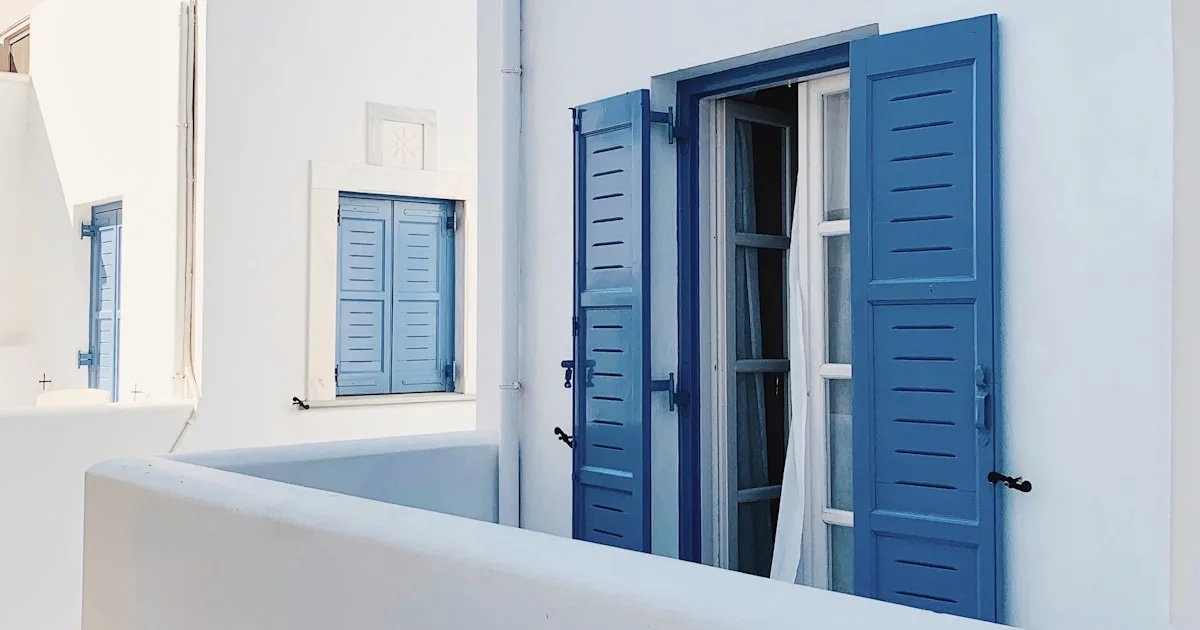
A villa, by definition, is a substantial residential property - typically detached, often on generous grounds, and characterized by spacious rooms, high ceilings, and significant outdoor areas. Villas span many architectural styles - Mediterranean, modern, colonial, tropical - but share common design challenges and opportunities.
Defining characteristics of villa interiors:
- Scale - rooms are larger, ceilings are higher, and windows are bigger than in typical homes. This demands proportionally larger furniture, bolder art, and more ambitious lighting.
- Indoor-outdoor connection - most villas have terraces, courtyards, gardens, or pool areas that function as extensions of interior rooms. The transition between inside and outside is a central design element.
- Multiple living zones - a villa may have formal and informal living rooms, a separate dining room, a library, an office, and several bedroom suites. Each needs its own character while contributing to a unified whole.
- Natural materials at scale - stone floors spanning entire ground floors, wooden beams crossing wide ceilings, full-height glass walls framing views. Villa design gives natural materials room to make a statement.
- Craftsmanship and detail - in a villa, there is space for details that smaller homes cannot accommodate: artisan ironwork, hand-plastered walls, bespoke cabinetry, and curated art collections.
The most important principle in villa design is that luxury is not about expense - it is about quality, proportion, and intentionality. A room filled with genuine materials, handcrafted objects, and thoughtful proportions will always feel more luxurious than one filled with expensive but generic furnishings.
Proportioning Large Rooms: Filling Space Without Filling It Up
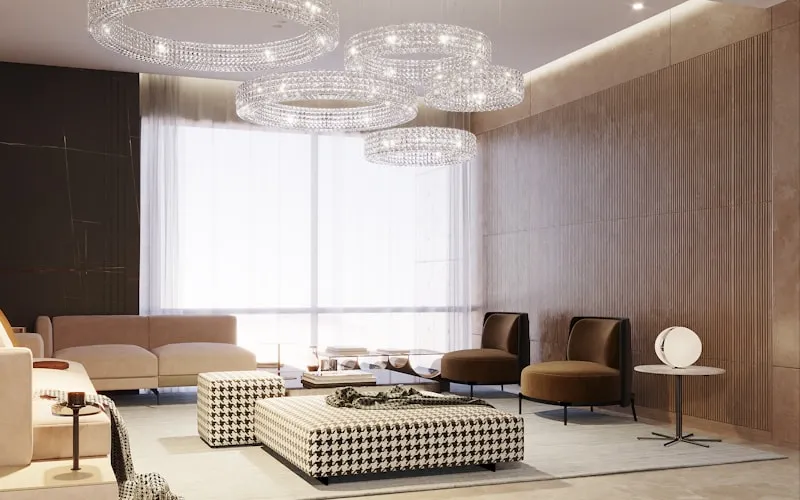
The most common mistake in villa design is treating large rooms like oversized versions of small rooms - scattering standard-sized furniture around the perimeter and hoping the space fills itself. It does not. Large rooms need different strategies.
Create rooms within rooms:
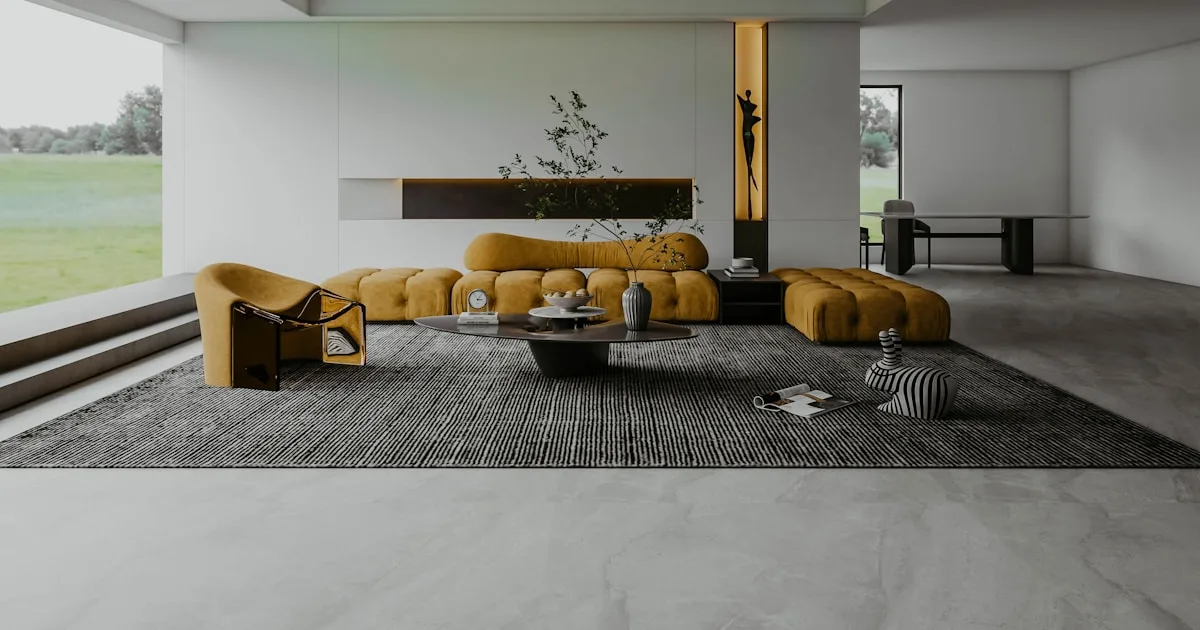
A large living area should contain multiple seating zones - a main conversation area, a reading corner, and perhaps a game or music area. Each zone is defined by its own furniture grouping, rug, and lighting, yet all relate through shared materials and colors. Think of the room as a landscape with distinct destinations rather than a single uniform space.
Scale furniture up:
Standard sofas look lost in villa-scale rooms. Choose deep, generously proportioned seating. Coffee tables should be substantial - a large solid wood or stone table anchors a conversation zone far better than a dainty one. Bookshelves should be floor-to-ceiling. Vases and decorative objects should be tall and commanding - a 60cm ceramic vessel, not a 15cm trinket.
Use large-scale art:
A single oversized painting or photograph on a large wall has far more impact than a cluster of small frames. The art should relate in scale to the wall - a general guideline is that the artwork should fill 60-75% of the available wall space.
Embrace furniture "islands":
Rather than pushing furniture against walls, pull it into the room to create floating furniture groupings with walkways around them. This approach fills the middle of the room (where emptiness is most noticeable) while leaving the perimeter clear for circulation and display.
Indoor-Outdoor Living: The Villa's Greatest Asset
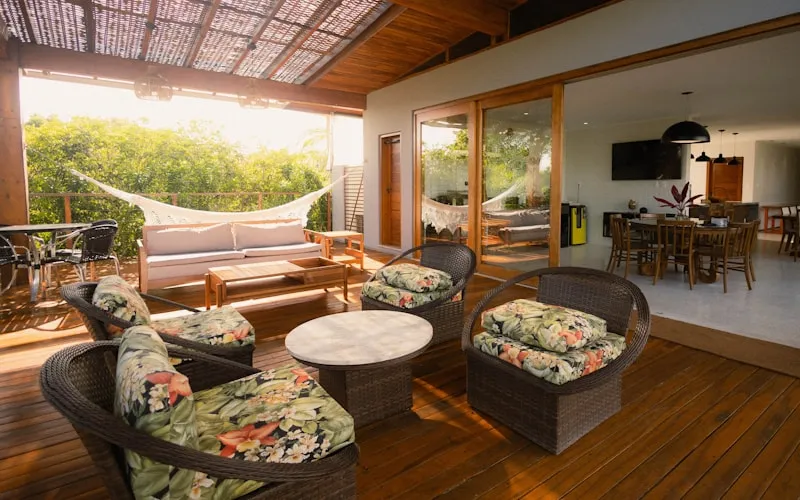
The relationship between interior and exterior spaces is what elevates villa living above all other residential types. A well-designed villa erases the boundary between inside and outside, creating a continuous living environment that changes with the time of day, the season, and the weather.
Design strategies for indoor-outdoor flow:
- Material continuity - extend indoor flooring materials (stone, tile) to the terrace to eliminate the visual threshold between inside and outside. Use the same stone for the living room floor and the terrace, creating one continuous plane.
- Aligned sight lines - position interior furniture so that seated views frame the garden, pool, or landscape beyond. A sofa facing a full-height glass door with a garden view beyond is the quintessential villa moment.
- Transitional zones - covered terraces, pergolas, and loggia spaces act as "outdoor rooms" that are sheltered enough for furniture and dining yet open to the air. Furnish these with weather-resistant versions of your interior style - rattan furniture, natural stone tables, and outdoor-grade textiles.
- Bringing the outside in - large potted plants, cut branches in tall vases, natural stone elements, and materials that reference the surrounding landscape ensure the interior feels connected to its setting even when doors are closed.
The covered terrace is often the most-used room in a villa - the place where meals happen, conversations unfold, and sunsets are watched. Invest in this space as seriously as you would the living room. Quality outdoor furniture, ambient lighting (lanterns, string lights, outdoor-rated lamps), and comfortable cushions make it a genuine living space, not an afterthought.
Natural Materials at Villa Scale
Villas give natural materials the space to express their full beauty. In a small apartment, a stone floor is a practical choice; in a villa, it is a geological statement that stretches across vast expanses, catching and reflecting light in patterns that change throughout the day.
Stone: The foundation of most villa interiors. Limestone, travertine, marble, and slate each bring different character. In warm climates, stone's cooling properties are a functional benefit alongside its beauty. Large-format stone tiles with minimal grout lines create a sense of uninterrupted flow, especially when carried from interior rooms through to outdoor terraces.
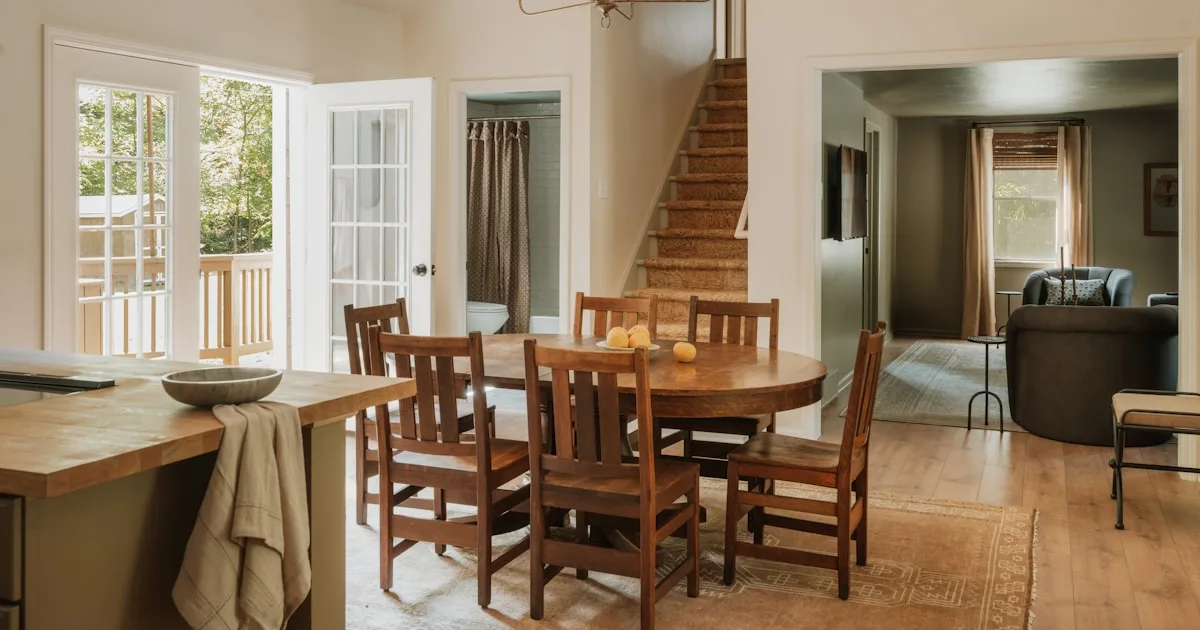
Wood: Used for beams, furniture, doors, shutters, and accent surfaces. In villa-scale rooms, exposed wooden beams and timber ceiling structures bring warmth and human scale to high ceilings. Substantial wooden dining tables - long enough to seat ten or twelve - become the heart of villa entertaining. The natural grain and character of solid wood is amplified by scale.
Rattan and woven fibers: Rattan furniture brings organic lightness to villa interiors that might otherwise feel heavy with stone and wood. Rattan dining chairs around a stone table, rattan pendants over a kitchen island, or rattan lounge chairs on a covered terrace - the weave catches light beautifully and adds handcrafted warmth at any scale.
Linen and natural textiles: In a villa, textiles serve the essential function of softening hard surfaces and absorbing sound in rooms that can otherwise echo. Floor-length linen curtains, generously sized linen cushions, and large wool or cotton rugs are not decorative extras but acoustic and comfort necessities.
Ceramic and pottery: Handmade ceramics - large-scale vases, bowls, and decorative objects - add artisan character to villa interiors. In rooms with the space for it, ceramics can be displayed on dedicated surfaces, creating small gallery moments within the home.
Lighting Grand Spaces: Drama, Warmth, and Function
Lighting in a villa is both more challenging and more rewarding than in smaller homes. High ceilings, large volumes, and multiple living zones require a sophisticated lighting plan that creates atmosphere, highlights architecture, and provides functional illumination.
Statement fixtures:
Villa-scale rooms can accommodate lighting fixtures that would overwhelm a smaller space. A large handcrafted pendant lamp - in rattan, ceramic, or woven fiber - descending from a high ceiling becomes the visual anchor of the room. Over a villa dining table, a dramatic fixture sets the tone for every meal. In an entrance hall, a statement light establishes the design language for the entire home.
The layered approach (essential for villas):
- Architectural lighting - recessed spots or cove lighting that washes walls and ceilings, highlighting texture and creating ambient glow
- Decorative fixtures - pendants, chandeliers, and sconces chosen for their sculptural beauty as much as their light output
- Task lighting - reading lamps, kitchen work lights, bathroom vanity lighting for specific activities
- Accent lighting - picture lights for art, spot lights for sculptural objects, and landscape lighting visible from inside that extends the visual environment
- Atmospheric lighting - candles, lanterns, and dimmable fixtures for evening relaxation
Outdoor lighting: A villa's exterior lighting is visible from inside and therefore part of the interior design. Illuminate trees, pathways, pool edges, and terrace areas to extend the visual depth of every room that faces outward. The view from a living room window into a beautifully lit garden at night is as much a part of the interior as the furniture.
Villa Design Room by Room
Entrance Hall: The first room sets the tone for the entire villa. A generous stone floor, a statement light fixture, a substantial console table with a large ceramic vase, and perhaps a single large mirror or piece of art. The entrance should feel spacious, welcoming, and impressive without trying too hard.
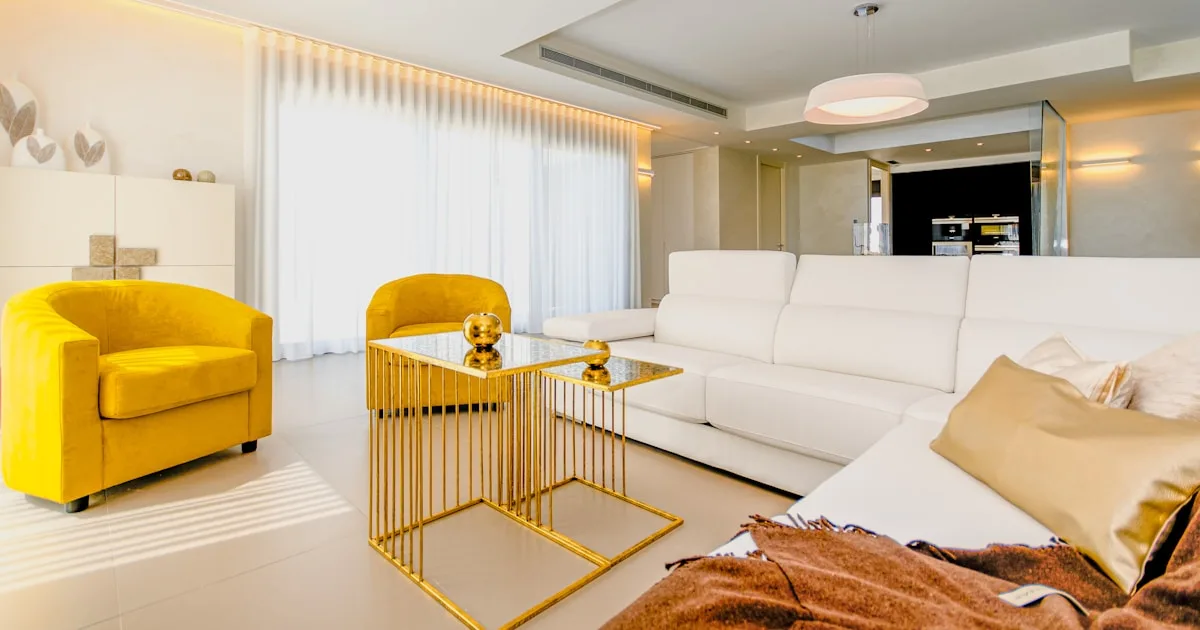
Main Living Room: Create at least two seating zones - a primary conversation grouping around a fireplace or view, and a secondary area (a reading corner, a pair of chairs by a window). Use a large rug to anchor the main zone. Proportionally large floor lamps and a statement pendant establish the lighting layers. Large potted plants connect the interior to the garden beyond.
Dining Room: A substantial wood or stone dining table, seating for at least eight, and a dramatic overhead fixture define the space. Built-in or freestanding sideboards provide serving surface and storage for dinnerware. A large-scale artwork or a series of tall vases on the sideboard completes the room.
Kitchen: Villa kitchens can be generously proportioned without feeling industrial. A large island in natural stone with wooden stools for casual seating. Open shelving for displaying handmade pottery. Pendant lamps over the island for task and ambient light. The kitchen in a villa should feel like the warm heart of the home, not a professional workspace.
Master Bedroom Suite: A room of retreat. A bed proportioned to the room (king-size minimum in most villas), flanked by substantial nightstands. A seating area - a chaise, a pair of armchairs, or a window seat - gives the bedroom a living-room quality. Linen bedding and curtains in soft neutrals. Walk-through to the dressing area and en-suite bathroom, with natural stone and wood continuing the material story.
Covered Terrace: Furnish it as fully as an indoor room. Comfortable rattan seating, a dining table for outdoor meals, ambient lighting (lanterns, string lights, candles), and potted plants and herbs. A ceiling fan for air circulation. This is often the villa's most-loved space.
Authentic Luxury: Quality Over Ostentation
True luxury in villa design is not about conspicuous expense - it is about the quality of experience. The most memorable villas are not the ones with the most gold leaf and marble, but the ones where every surface feels good to touch, every view is considered, and every moment of daily life is supported by thoughtful design.
Markers of authentic villa luxury:
- Material honesty - real stone, real wood, real linen, real craftsmanship. Natural materials that age beautifully are more luxurious than synthetic imitations of expensive materials. A handwoven linen curtain that softens with each wash is more luxurious than a stiff silk reproduction.
- Handmade details - artisan-crafted fixtures, hand-thrown ceramics, handwoven baskets, and furniture with visible maker's marks. These details communicate that someone cared, which is the essence of luxury.
- Spatial generosity - wide hallways, generous landing areas, and rooms that do not cram in maximum furniture. Luxury is having the space to breathe and the restraint to leave it open.
- Sensory completeness - the scent of fresh flowers or a linen candle, the sound of water from a garden fountain, the feel of cool stone underfoot on a warm day. Luxury engages all the senses, not just sight.
- Quality lighting - the ability to dim every room, to have beautiful fixtures that are artworks in themselves, and to light the garden so that evening views are as beautiful as daytime ones.
The most powerful luxury in a villa is the sense that every element was chosen with care, that nothing is there by default, and that the home reflects the personality and values of its inhabitants rather than a catalogue or a trend.
Villa interior design is the opportunity to work with space at its most generous - to create rooms where natural materials express their full beauty, where indoor and outdoor living merge seamlessly, and where luxury is defined by quality, craftsmanship, and intentional design rather than mere expense.
Begin with the bones: honest, beautiful materials - stone floors, wooden beams, and linen textiles. Layer in the character: handwoven rattan furniture, artisan ceramic vases, and statement lighting that draws the eye and warms the room. Furnish the outdoor spaces with the same care as the interior rooms. And above all, leave room - for the eye to travel, for the light to play, and for the villa to feel not like a showpiece, but like the most beautiful version of home.
Frequently Asked Questions
Enjoyed this guide?
Share it with someone who'd find it useful