Buying curtains sounds simple until you're actually doing it. Suddenly you're drowning in questions: How do I measure? Should they touch the floor? What's the difference between curtains and drapes? Will these look right with my green accent wall? And should I mount them inside or outside the window frame?
We wrote this guide because we've heard every one of those questions from our customers - and because getting curtains wrong is an expensive, frustrating mistake. The wrong length makes a room look awkward. The wrong fabric blocks too much (or too little) light. The wrong color clashes with walls you spent a weekend painting.
This isn't just a theory guide, either. We've tested and reviewed every curtain in our Natural Linen Curtains collection - 10 curtain panels and 2 accessories - and ranked them by category so you can skip straight to what works for your room, your budget, and your style.
Whether you're dressing floor-to-ceiling windows in a living room, adding softness to a bedroom, or figuring out what to hang next to sage green walls, this guide has you covered. Let's start with the basics and work our way to the good stuff.
Curtains vs Drapes: What's the Real Difference?
Let's settle the curtains vs drapes debate right up front, because the terms get used interchangeably - and they shouldn't be. Understanding the difference helps you buy the right product for the right room.
Curtains are typically lighter-weight fabric panels. They can be lined or unlined, and they come in every length from sill to floor. Curtains are the everyday, versatile choice - they filter light, add softness, and work in casual to semi-formal rooms. Most of what you'll find in our curtain collection falls into this category: linen sheers, tulle panels, and light-filtering fabrics designed for relaxed, natural interiors.
Drapes are heavier, more structured, and almost always lined (often with blackout or thermal lining). They're floor-length or longer, and they hang in formal, tailored pleats. Drapes are what you'd see in a traditional dining room or a bedroom where total light-blocking is the goal. Our Herringbone Blackout Curtains and Natural Linen Blackout Curtains straddle the line between curtain and drape - they have the natural, relaxed look of curtains but the blackout performance of traditional drapes.
When to choose curtains:
- You want filtered natural light, not total darkness
- The room is casual, modern, or has a natural/Japandi aesthetic
- You want easy-care fabrics that don't need dry cleaning
- You're layering over blinds or shades that handle privacy
When to choose drapes:
- You need serious light-blocking (bedrooms, nurseries, home theaters)
- Thermal insulation matters (cold climate, drafty windows)
- The room is formal or traditional
- You want floor-to-puddle lengths with structured pleating
The practical takeaway: Most modern homes use curtains, not drapes. The shift toward lighter, more natural interiors means that airy linen and sheer panels have largely replaced heavy brocade drapes in everything except bedrooms. And even in bedrooms, the trend is toward blackout curtains with a relaxed, natural feel - not the stiff, formal drapes of decades past.
How Curtains Are Measured: The Complete Measuring Guide
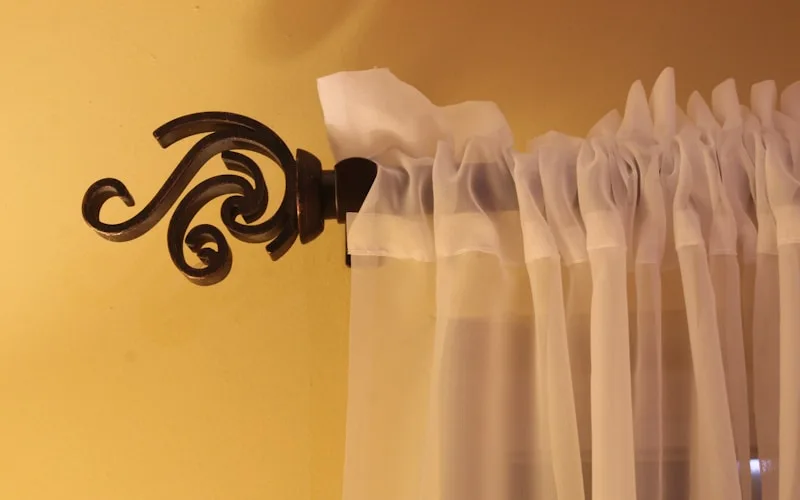
Understanding how curtains are measured is the single most important step in getting curtains that look right. Measure wrong, and even the most beautiful fabric will look cheap or awkward. Here's exactly how to do it.
What you'll need: A steel tape measure (fabric tape measures stretch and introduce errors), a step stool, a pencil, and a notepad. Measure twice - write down the numbers immediately.
Step 1: Measure the width.
Measure the width of your curtain rod (or the width you plan to install), not the window itself. This is important - your curtains need to cover the rod, not just the glass. If you don't have a rod yet, plan for the rod to extend 15-20 cm (6-8 inches) beyond each side of the window frame so curtains can stack on the wall when open, letting maximum light through.
Now here's the key: multiply the rod width by 1.5 to 2 to get the total curtain fabric width you need. This multiplier creates the beautiful, full gathers that make curtains look luxurious rather than flat and skimpy. For example, a 150 cm rod needs 225-300 cm of total curtain fabric width. If you're buying two panels (one for each side), divide that total by two.
Step 2: Measure the height.
Where you measure from depends on how you're mounting the curtains. For a standard wall-mounted rod, measure from the rod position to where you want the curtains to end (floor, sill, or below the sill). For ceiling-mounted tracks, measure from the ceiling.
Pro tip: Always measure height in at least three places - left edge, center, and right edge of the window. Floors and ceilings aren't always level, and even a 1-2 cm difference is noticeable on hung curtains. Use the longest measurement and have the curtains hemmed to match if needed.
Step 3: Account for the hanging method.
Different curtain headers affect the finished length:
- Grommet/eyelet top: The fabric starts about 2-3 cm above the rod. Measure from the top of the rod and add 2-3 cm.
- Rod pocket (top pocket): The rod sits inside a fabric sleeve, so the top of the curtain sits slightly above the rod. Measure from the top of the rod.
- Hook/pleated tape: Hooks sit below the rod, dropping the curtain about 2-3 cm. Measure from the bottom of the rod.
- Tab top: Tabs create a gap between the rod and the curtain top. The curtain hangs 5-10 cm below the rod. Account for this drop.
Our Japandi Linen Sheer Curtain is worth mentioning here because it comes in four header options - hook top, pull pleated tape, grommet top, and top pocket - so you can match whatever hanging method your rod requires. That flexibility is rare.
Common measuring mistakes to avoid:
- Measuring the window frame instead of the rod position
- Forgetting the fullness multiplier (resulting in flat, skimpy curtains)
- Not accounting for the header style's impact on length
- Measuring only once and assuming the floor is level
- Measuring from the top of the window frame instead of from where the rod will actually sit
How Long Should Curtains Be? The Definitive Length Guide
The question of how long curtains should be has a surprisingly definitive answer for most rooms: they should just touch the floor or hover no more than 1 cm above it. But there are four distinct length options, and each creates a different look and serves a different purpose.
1. Floor-length (the standard). The bottom hem just kisses the floor or hovers 0.5-1 cm above it. This is the most universally flattering length, appropriate for living rooms, dining rooms, bedrooms, and home offices. It looks clean, intentional, and proportional. This is the length we recommend for at least 80% of curtain installations. Most of our curtains, including the Stone Washed Linen Curtains and Japandi Light Linen Sheers, are available in floor-length sizes.
2. Puddle length (2-5 cm on the floor). The fabric pools gently on the floor, creating a romantic, luxurious look. This works beautifully in formal rooms, bedrooms, and spaces where you want drama and softness. The trade-off: puddled curtains collect dust and are harder to vacuum around. They also don't work well in high-traffic areas or homes with pets. Best suited for natural linen fabrics that drape softly.
3. Sill-length. The curtain ends at the windowsill, which works in exactly two scenarios: kitchens (where long curtains near stoves are a fire hazard) and bathrooms (where floor-length curtains would get wet). In every other room, sill-length curtains look truncated and make ceilings feel lower. If you need a short treatment elsewhere, consider roman shades instead of sill-length curtains.
4. Below-sill / apron length. The curtain extends 10-15 cm below the sill. This is the most awkward length - it looks like you bought curtains that were too short but not short enough to be intentional. We actively recommend against this length in almost all situations. The only exception is children's rooms where you want the curtain out of reach of small hands but still providing visual warmth.
The golden rule: When in doubt, go floor-length. It works in every room, every style, and with every fabric. Mounting your rod close to the ceiling (even if the window is shorter) and running floor-length curtains creates the illusion of taller windows and higher ceilings - one of the most reliable tricks in interior design.
Size range reference: Our curtain collection covers heights from 120 cm to 270 cm, which accommodates everything from standard 8-foot ceilings to tall period windows. The Beige Linen Tulle Curtains offer particularly extensive sizing with widths from 100 cm to 800 cm and heights from 120 cm to 270 cm - making them one of the most flexible options for unusual window sizes.
Where Should Curtains Fall? Placement & Hanging Guide
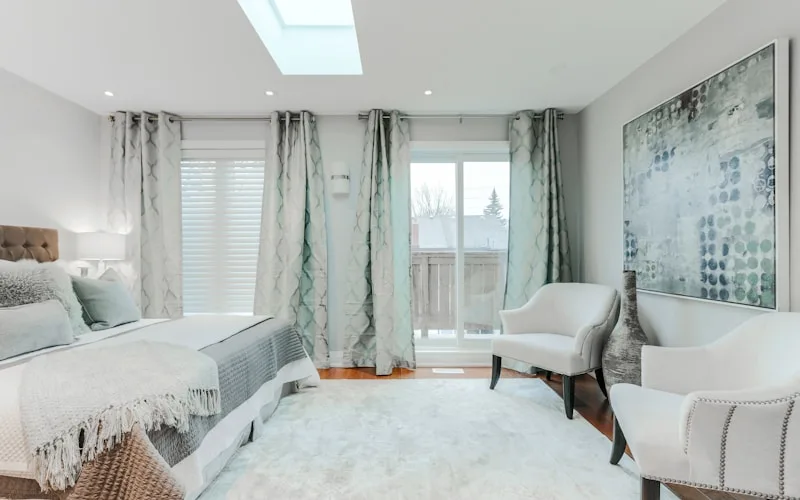
Knowing where curtains should fall involves more than just length - it's about where the rod sits, how far the curtains extend past the window, and how the fabric behaves when open and closed. Get the placement right, and even inexpensive curtains look designer. Get it wrong, and expensive curtains look cheap.
Rod height: Go as high as possible.
Mount your curtain rod 5-15 cm below the ceiling, regardless of where the top of the window frame is. This is probably the single biggest impact you can make on how your curtains look. High-mounted rods make windows appear taller, ceilings feel higher, and the room feel more grand. The fabric between the rod and the window top doesn't look odd - it adds visual height.
The one exception: if you have crown molding, mount the rod just below the molding rather than at the ceiling.
Rod width: Extend past the frame.
Your curtain rod should extend 15-25 cm beyond each side of the window frame. This allows the curtain panels to stack entirely on the wall when open, rather than covering the glass. The result: maximum light entry when curtains are open, and the visual illusion of a wider window. For narrow windows, extending even further (30 cm each side) dramatically improves proportions.
Where the hem falls.
As covered in the length section, the ideal hem position is just touching the floor - within 0.5-1 cm. A helpful test: after hanging, the hem should gently graze the floor when the curtain is at rest. If it bunches, it's too long for a clean look (unless you intentionally want a puddle). If there's a visible gap, it looks like the curtains shrank.
Stack-back positioning.
When your curtains are open, the gathered fabric that stacks to each side is called the "stack-back." Ideally, 100% of the stack-back should sit on the wall, not over the glass. This is why rod extension matters so much. For thicker fabrics like our Herringbone Blackout Curtains, the stack-back is larger, so you'll need more rod extension. Lighter fabrics like the White Sheer Voile Curtains stack very compactly.
Where curtains should fall on radiators.
If you have a radiator below the window, you have two choices: hang curtains to the sill so they don't block heat output, or hang floor-length curtains and tuck them behind the radiator when the heating is on. The worst option is curtains that end right at the top of the radiator - it looks accidental and blocks heat.
Using tiebacks to control the fall.
Tiebacks hold curtains to the side and change how the fabric falls when open. They should be positioned roughly two-thirds of the way down from the top of the curtain for the most graceful drape. Our Nordic Hemp Rope Tiebacks add a natural, textured accent while keeping curtains neatly positioned.
Curtains Inside the Window Frame: When & How to Mount Inside
The question of whether to hang curtains inside the window frame (inside mount) or outside it (outside mount) affects everything from how much light enters to how large the window appears. Here's when each approach works best.
Inside mount: what it means.
Inside-mounted curtains or treatments sit within the window reveal - the recessed area between the wall surface and the glass. The hardware (rod, track, or brackets) attaches to the inside top or sides of the window frame, and the fabric stays contained within that frame.
When inside mount works well:
- Deep window reveals (10+ cm deep). Deep reveals give the fabric room to hang and gather without pressing against the glass. This is common in older homes with thick walls, period properties, and some modern constructions with deep-set windows.
- When you want a clean, architectural look. Inside-mounted curtains show off the window trim and keep the wall surface uninterrupted. It's a particularly good choice when you have beautiful window molding you want to display.
- Bay windows and recessed windows. Inside mount is often the most practical approach for bay windows, where each section gets its own inside-mounted panel or shade.
- When you're layering. Use inside-mounted sheers or light-filtering curtains as the base layer, with outside-mounted decorative panels over them. Our Airy White Tulle Curtains work beautifully as an inside-mounted base layer.
When to avoid inside mount:
- Shallow window reveals. If the reveal is less than 7-8 cm deep, there's not enough room for the fabric to hang freely. It will press against the glass, look cramped, and function poorly.
- When you want the window to look bigger. Inside mounting emphasizes the actual window size. If your windows are small, outside mounting with extended rods will make them appear larger.
- When maximum light-blocking is needed. Inside-mounted curtains leave gaps at the edges where light leaks in. For bedrooms and nurseries, outside mount with overlap is better for darkness.
Inside mount hardware options:
- Tension rods: The easiest inside-mount solution - a spring-loaded rod that presses against the inside of the frame. No drilling, no holes. Works well for lightweight curtains like our Beige Linen Tulle Curtains and White Sheer Voile Curtains. Not suitable for heavy fabrics.
- Inside-mount brackets: Screwed into the top of the window reveal. More secure than tension rods and suitable for heavier curtains. Requires a reveal deep enough for brackets plus fabric.
- Ceiling-mount tracks inside the reveal: A track mounted to the top of the reveal, allowing curtains to slide open and closed. The most polished inside-mount option.
Our recommendation: For most rooms, outside mount is the better default because it makes windows look larger and gives you more flexibility with rod height and width. Save inside mount for deep-reveal windows, bay windows, or layering situations where the inside treatment is paired with an outside decorative layer.
What Curtains Go With Green Walls? Color Pairing Guide
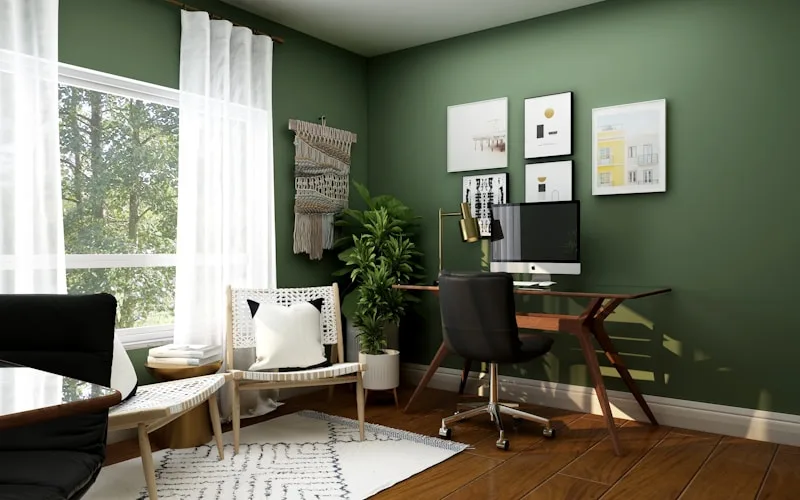
Green is one of the most popular wall colors right now - and for good reason. It brings nature indoors, creates calm, and works in everything from living rooms to bedrooms. But figuring out what curtains go with green walls can be tricky because green comes in so many shades, each needing a different curtain partner.
Sage green walls (the most popular).
Sage is soft, muted, and earthy. It pairs beautifully with warm neutrals. Your best curtain choices:
- Cream or natural linen - The ideal match. Warm cream curtains against sage walls create a serene, organic feel. Our Beige Linen Tulle Curtains (€24.99) are practically made for sage walls - the warm beige tone complements the gray-green undertones perfectly.
- Warm white - Clean but not stark. The Airy White Tulle Curtains bring lightness without the cold contrast of bright white.
- Soft terracotta or rust - A complementary color that adds warmth and visual interest. This pairing feels distinctly Mediterranean and works well with natural textile accents.
Dark green / forest green walls.
Dark green is dramatic and moody. It needs curtains that either soften the intensity or lean into the richness:
- White sheers - The contrast between dark walls and light, airy curtains is stunning. It prevents the room from feeling like a cave while maintaining the drama. The White Sheer Voile Curtains (€19.99) or Japandi Light Linen Sheers in white are perfect here.
- Natural linen - Stone washed linen in its natural, unbleached tone brings organic warmth. Our Stone Washed Linen Curtains (100% French linen, €27.99) are the standout choice.
- Mustard or gold - A bold, confident pairing. Green and gold is a classic combination that feels luxurious without being stuffy.
Olive green walls.
Olive has warm, yellow undertones, so it pairs best with other warm tones:
- Warm beige or sand - Keeps everything in the same warm family. Feels cohesive and earthy.
- Cream with texture - Textured linen curtains in cream add dimension. The Japandi Linen Sheer Curtain with its thicker tulle texture works beautifully against olive walls.
- Chocolate brown - For a rich, tonal look that feels grounded and sophisticated.
Emerald green walls.
Emerald is jewel-toned and glamorous. It calls for curtains that match its confidence:
- Bright white - The crispest white you can find. The contrast is electric and modern.
- Blush pink - Unexpected and beautiful. Emerald and pink is one of the most striking combinations in interior design.
- Charcoal or deep gray - For a sophisticated, moody palette. Our Natural Linen Blackout Curtains come in grey and dark grey options that pair wonderfully with emerald walls.
The universal rule for green walls: When in doubt, natural linen in its undyed, beige-cream state works with every shade of green. It's the safe, beautiful choice that always looks intentional. Our Natural Linen Curtains collection is built around exactly these tones.
Our Top Curtain Picks: Reviewed & Ranked
We've tested every curtain in our collection and ranked them by category. Here's our honest assessment - what works, what each is best for, and where to spend your money.
BEST IN CLASS WINNERS:
- Best Overall Value: Stone Washed Linen Curtains - €27.99
- Best for Privacy/Bedrooms: Herringbone Blackout Curtains - €49.99
- Best Sheer: Japandi Light Linen Sheer Curtains - €39.99
- Best Budget: White Sheer Voile Curtains - €19.99
- Best Premium: Japandi Linen Sheer Curtain (Thick Tulle) - €64.99
CATEGORY 1: BLACKOUT & PRIVACY CURTAINS
1. Herringbone Blackout Curtains for Warm Minimalism - €49.99 ★★★★★
View product | Colors: Space Grey, Haze Blue, Tulle, Milk Tea
These are the standout blackout option. The herringbone texture gives them visual interest that most blackout curtains lack - they look like a design choice, not just a functional necessity. The "Milk Tea" color is particularly beautiful: a warm, muted beige that works in virtually any room. The blackout performance is genuine - we tested them in a south-facing bedroom and they blocked approximately 95% of light. The fabric has enough weight to hang beautifully without being stiff.
Best for: Bedrooms, nurseries, home theaters, any room where you need darkness plus style.
Pros: Real blackout performance, textured weave looks premium, four versatile colors, good weight.
Cons: At €49.99 they're mid-range in price; only one width option per panel.
2. Natural Linen Blackout Curtains for Serenity - €49.99 ★★★★
View product | Colors: Grey, Blue, Beige-Grey, Dark Grey
A more traditional linen-look blackout curtain. The texture is smoother than the Herringbone, with a subtle natural linen grain. The color range skews cooler - the Grey and Dark Grey are excellent for modern, minimal interiors, and the Blue is a muted, sophisticated tone that pairs well with warm wood. Blackout performance is comparable to the Herringbone.
Best for: Modern bedrooms, Scandinavian or Japandi interiors, rooms with cool color palettes.
Pros: Natural linen appearance with blackout function, four color options, elegant drape.
Cons: Less texture/visual interest than the Herringbone; the Beige-Grey can read slightly flat.
CATEGORY 2: SHEER & LIGHT-FILTERING CURTAINS
3. Japandi Light: Linen Sheer Curtains - €39.99 ★★★★★
View product | Colors: White, Linen
Our top sheer pick. These hit the perfect balance between transparency and privacy - you can see shapes outside but no one can see details inside during the day. The fabric has a beautiful linen texture with just enough weight to drape gracefully without being floppy. The "Linen" color (a warm natural tone) is gorgeous and works with nearly any interior. At €39.99, they're the sweet spot between the budget sheers and the premium options.
Best for: Living rooms, dining rooms, any room where you want soft filtered light and daytime privacy.
Pros: Perfect light filtering, beautiful texture, two versatile colors, great drape, moderate price.
Cons: Only two color options; not enough privacy for ground-floor bedrooms at night.
4. Japandi Linen Sheer Curtain (Thick Tulle) - €64.99 ★★★★★
View product | Headers: Hook top, Pull pleated tape, Grommet top, Top pocket
The premium option - and worth it if you care about header flexibility. This is the only curtain in the collection that offers four different hanging methods, which means it works with whatever hardware you already have. The fabric is a thicker tulle that filters light beautifully while providing better privacy than standard sheers. It feels substantial in the hand.
Best for: Customers who need a specific header type, premium interiors, those who want sheer with more substance.
Pros: Four header options (unique in this price range), thick luxurious tulle, excellent privacy for a sheer.
Cons: Highest price point in the collection at €64.99; only available in neutral tones.
5. Linen Sheer Curtains (Customizable) - €64.99 ★★★★
View product | Colors: Blue, Linen, Grey
Matched price with the Thick Tulle above, but this one's strength is the color range - particularly the Blue option, which is a muted, sophisticated blue-grey that's hard to find in natural curtains. The "customizable" aspect refers to the size flexibility. The fabric is lighter than the Thick Tulle, creating a more ethereal, floating effect.
Best for: Rooms needing a specific color match, particularly blue/grey palettes, coastal or Scandinavian interiors.
Pros: Three color options including a beautiful blue, customizable sizing, elegant lightweight drape.
Cons: Same price as the Thick Tulle but less substantial; blue color may not suit warm-toned rooms.
6. Beige Linen Tulle Curtains - €24.99 ★★★★
View product | Sizes: W100cm-W800cm, H120cm-H270cm
The sizing champion. No other curtain in the collection offers this range - from 100 cm to a massive 800 cm in width, and 120 cm to 270 cm in height. If you have an unusually sized window or need to cover a very wide span, this is your answer. The beige tone is warm and natural, and the price at €24.99 is very competitive for a linen tulle.
Best for: Unusual window sizes, wide windows, budget-conscious buyers who want natural linen look.
Pros: Unmatched size range, attractive price, warm natural beige, genuine linen tulle.
Cons: Only one color (beige); fabric is on the thinner side compared to premium sheers.
CATEGORY 3: TULLE & VOILE CURTAINS
7. Airy White Tulle Curtains (Single Panel) - €29.99 ★★★★
View product | Sizes: W100-W500cm
Bright, clean white tulle that lets maximum light through while softening the view. Sold as single panels, which is actually preferable - you can buy exactly the number you need rather than being stuck with pairs. The fabric is appropriately lightweight for tulle: floaty and ethereal, moving gently in a breeze. Perfect as a layering base behind heavier curtains.
Best for: Layering behind blackout curtains, inside mounting in deep window reveals, maximizing light.
Pros: Beautiful white tulle, sold as single panels for flexibility, good width range, affordable.
Cons: Minimal privacy; single panel means buying two for a standard window.
8. White Sheer Curtains - Voile Tulle Drapes - €19.99 ★★★★
View product | Extensive size range
The best value in the entire collection. At €19.99, these are genuinely good quality voile curtains that look significantly more expensive than they are. The fabric is smooth and even, with a subtle sheen that catches light nicely. The size range is extensive, covering most standard and larger windows. If you need simple, clean white sheers and don't want to overspend, start here.
Best for: Budget-conscious decorating, rental apartments, any room needing basic light diffusion.
Pros: Lowest price in collection, extensive sizing, smooth quality voile, versatile white.
Cons: Voile rather than linen (synthetic hand feel); less texture than linen options.
9. Thicken Sheer Curtains Set of 2 Panels - €29.99 ★★★
View product | Material: 100% polyester
Sold as a convenient set of two panels, which simplifies the buying process. The "thicken" description is accurate - these are denser than standard sheers, offering better privacy and light filtering. The trade-off is that they're 100% polyester rather than natural linen, which is noticeable in the hand feel and drape. They don't have the organic movement of linen, but they're wrinkle-resistant and easy to care for.
Best for: Buyers wanting a ready two-panel set, low-maintenance households, balcony doors.
Pros: Convenient two-panel set, thicker for better privacy, wrinkle-resistant polyester, easy wash.
Cons: Polyester rather than natural fiber; less refined drape than linen options.
CATEGORY 4: PREMIUM NATURAL LINEN
10. Stone Washed Linen Curtains - €27.99 ★★★★★
View product | Material: 100% France Linen
Our Best Overall Value winner, and it's not close. 100% French linen at €27.99 is exceptional value - comparable curtains from linen-specialist brands typically cost 3-4 times this. The stone washing gives the fabric a beautifully soft, lived-in drape from day one (no stiff "breaking in" period). It filters light with a warm, golden quality that's distinctive to real linen. The natural, undyed colorway goes with everything - sage walls, white walls, wood-paneled walls, you name it.
Best for: Anyone who wants real linen quality without the luxury price tag, natural/organic interiors.
Pros: 100% French linen (the real deal), stone washed for instant softness, incredible value, timeless color.
Cons: Limited to natural/undyed color; linen wrinkles (but that's part of the charm).
Finishing Touches: Curtain Accessories That Complete the Look
Curtain accessories are small details that make a significant difference in how your curtains look and function. Tiebacks in particular affect where curtains fall when open, how much light enters, and the overall aesthetic of the window.
Nordic Hemp Rope Curtain Tiebacks - €19.99 ★★★★
View product | Material: Hemp fabric and wood
A Scandinavian-inspired tieback combining hemp rope with a wooden accent. The wood detail elevates it beyond a simple rope tie and gives it a Nordic, minimalist quality. The hemp is sturdy enough to hold heavier curtain panels securely. This pairs especially well with our Japandi-style curtains and rooms with wooden furniture or natural wood accents.
Best paired with: Japandi Light Linen Sheers, Herringbone Blackout Curtains, any Japandi or Scandinavian interior.
Tieback placement tip: Position tiebacks approximately two-thirds of the way down from the top of the curtain for the most elegant drape. Placing them at the midpoint creates an hourglass shape. Placing them lower (three-quarters down) creates a more casual, gathered look. Experiment before drilling the wall hook - use a temporary adhesive hook first to test the position.
Beyond tiebacks, consider complementing your curtains with natural lighting that enhances the filtered light effect, and coordinating textiles like cushion covers and throws that tie the room together.
Choosing curtains doesn't have to be overwhelming. Here's the cheat sheet: measure from the rod (not the window), multiply the width by 1.5-2x for fullness, go floor-length in almost every room, mount the rod near the ceiling and extended past the frame, and when in doubt choose natural linen in a neutral tone.
If you have green walls, you're in luck - natural linen curtains in beige, cream, or white pair beautifully with every shade of green. If you need blackout, our Herringbone Blackout Curtains deliver darkness without sacrificing style. And if you're on a budget, the Stone Washed Linen Curtains at €27.99 offer genuine French linen quality at a price that feels almost too good.
The right curtains don't just cover your windows - they transform the entire feel of a room. They control light, add texture, create warmth, and make spaces feel finished and intentional. Take the time to measure properly, choose the right length and fabric, and you'll have curtains that make you smile every time you walk into the room.
Browse our full Natural Linen Curtains collection to find the perfect match, or explore our textile collection for coordinating cushions, throws, and table linens that complete the look.
Frequently Asked Questions
Enjoyed this guide?
Share it with someone who'd find it useful